Yangzhou Kangcheng Power Equipment Co., Ltd.
Wholesale genset diesel generator Manufacturer2026-10-30
Content
Picture a food-processing plant specifying a 400 kW standby set: the load list is finished, the switchgear is chosen, and the only open question is which engine platform sits on the skid. A Yuchai diesel generator usually wins that comparison on three counts — it starts reliably after long idle periods, it is built on a heavy-duty water-cooled industrial engine, and its price per kilowatt is easier to justify than premium imported platforms at equivalent duty.
The engine badge matters far less than the numbers around it. Duty rating, alternator match, load-step behaviour and site noise limits decide whether a set runs for 20,000 hours or fails its first load-bank test, so those are the four things worth settling before anything is ordered.
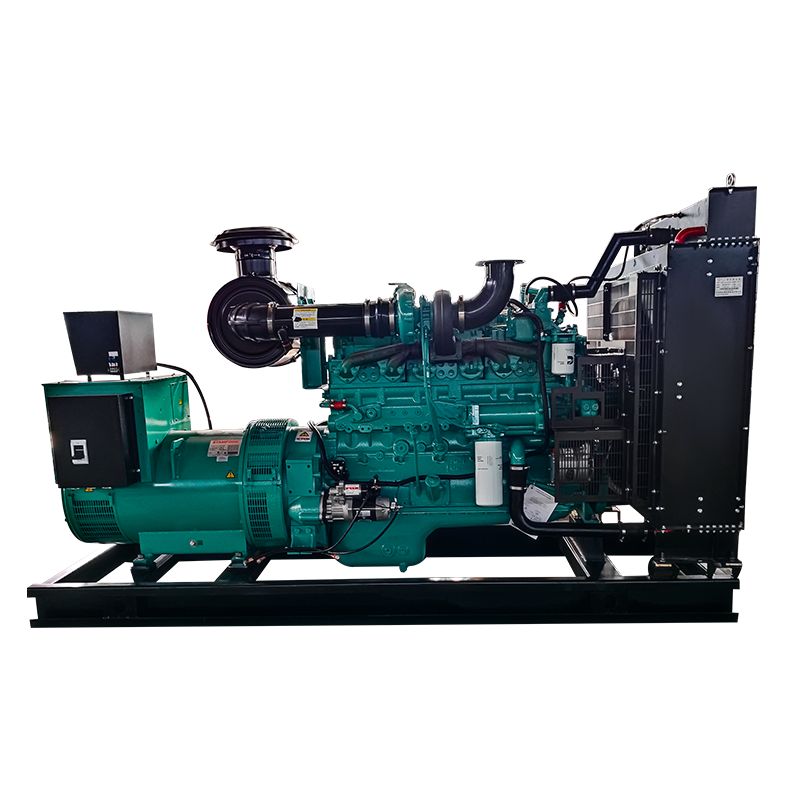
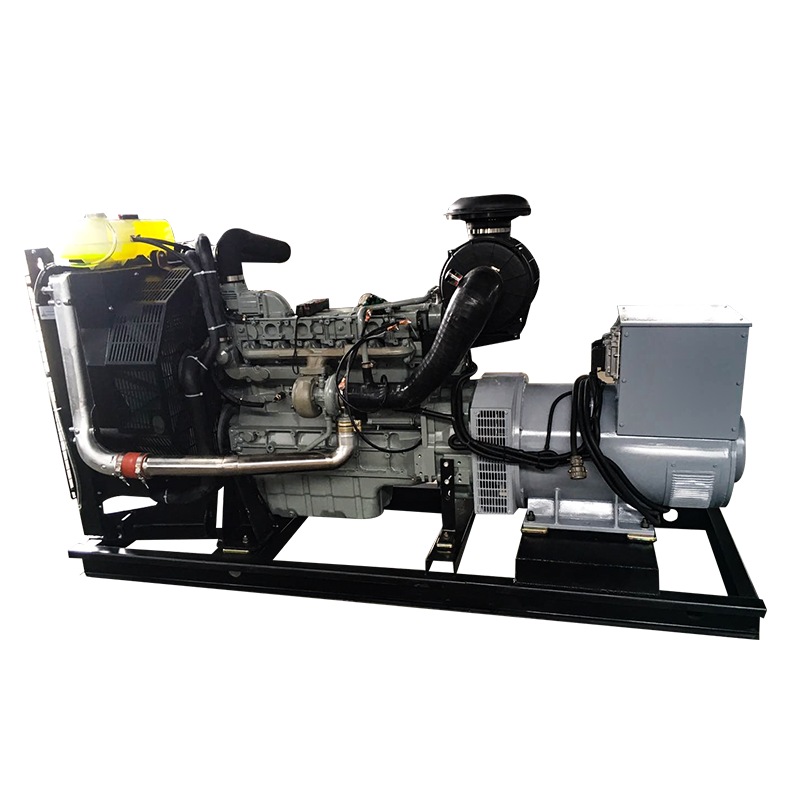
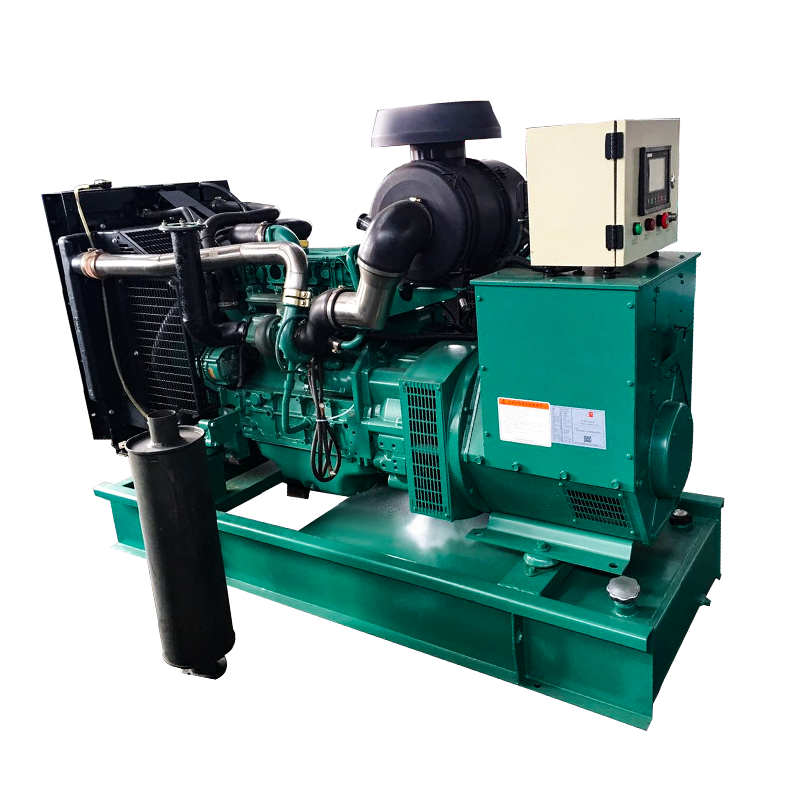
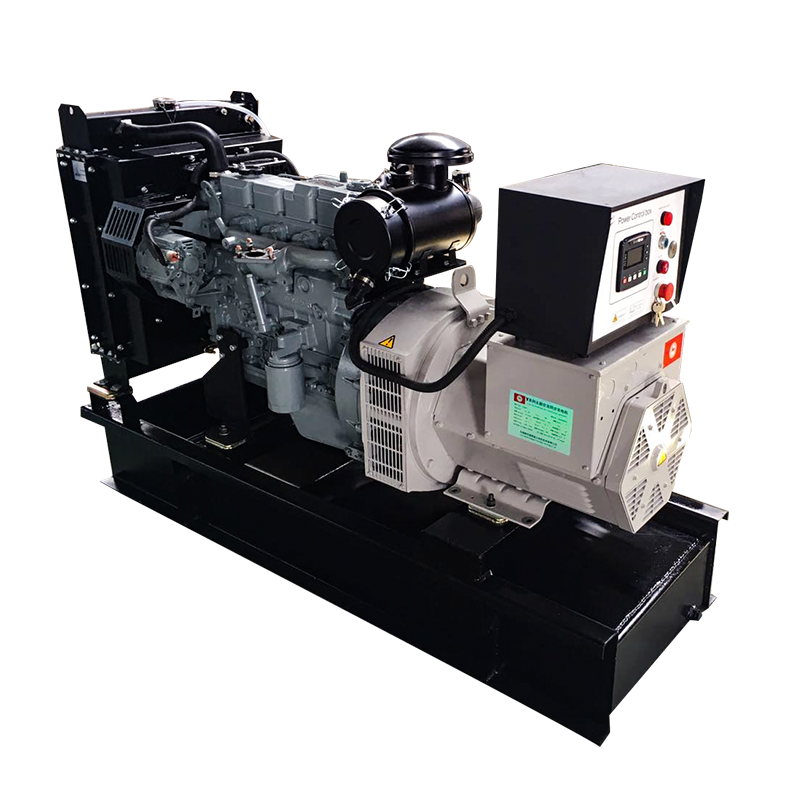
A Yuchai diesel generator is a complete generating set built around a Guangxi Yuchai engine: a heavy-duty, four-stroke, water-cooled industrial diesel, supplied with radiator and fan and fitted with mechanical or electronic governing depending on the model. Around that engine, the set consists of:
Two suppliers can quote the same engine at very different prices because the base frame, wiring, protection settings, canopy acoustics and factory load test are where a set is made or ruined. A 400 kW engine coupled to a 500 kVA alternator is simple arithmetic; the same engine in a canopy that recirculates exhaust heat into the radiator is a warranty claim waiting to happen. Our catalogue lists Yuchai-powered sets at 360 kW, 400 kW, 900 kW and 1000 kW, inside a manufacturing range from 7 kW to 2500 kW.
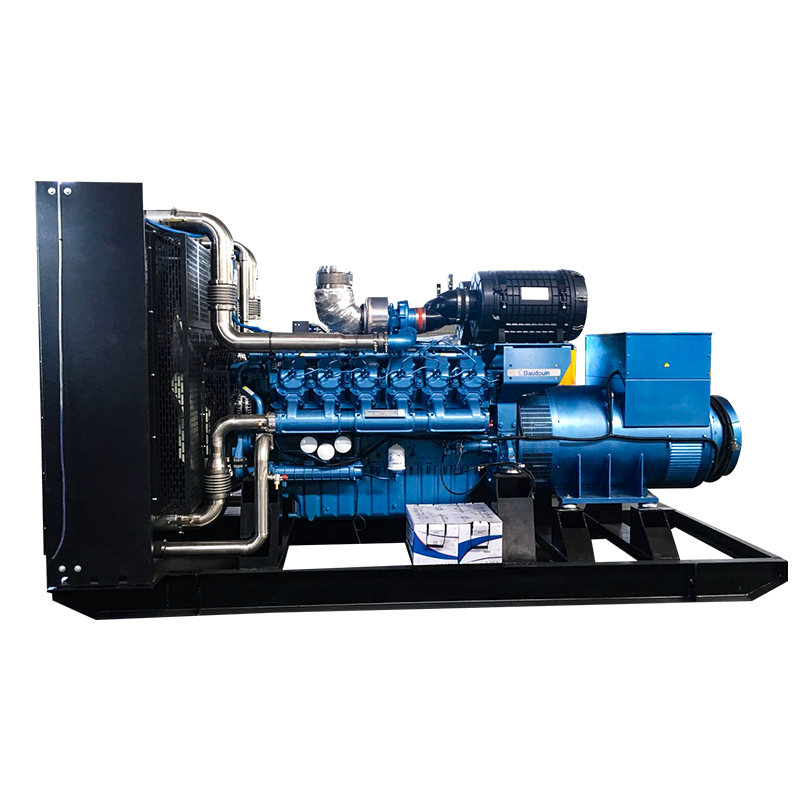
 Yuchai Diesel Generator Set Range: 360 kW to 1000 kW ModelsCompare Yuchai-powered 360, 400, 900 and 1000 kW sets, with duty ratings, configurations and applications detailed before selecting.View Product →
Choose a duty rating before a power rating. ISO 8528 defines the three that matter commercially, and a set quoted against the wrong one is either overpriced or overloaded.
| Duty rating | Typical application | Load guidance |
|---|---|---|
| Standby (ESP) | Emergency backup, mains failure, life-safety circuits | Variable load, limited annual hours, no sustained overload |
| Prime (PRP) | Off-grid sites, daily running, remote facilities | Unlimited hours at variable load, short overload allowance |
| Continuous (COP) | Baseload generation at a fixed load | Constant load only, no overload allowance, derated output |
The consequence is blunt: if the set runs six hours a day at 80% load all year, a standby-rated machine is the wrong purchase regardless of price. Engine life is counted in hours at load, and running a standby set at prime-power levels shortens the overhaul interval and can fall outside warranty conditions.
Sizing starts with a load list. Total the running kW of everything the set must carry, divide by the power factor (typically 0.8) to reach kVA, then add the starting contribution of the largest motor.
For a 400 kW prime-rated Yuchai set, a continuous load of 300-320 kW leaves room for motor starting and short peaks without pushing the engine into overload.
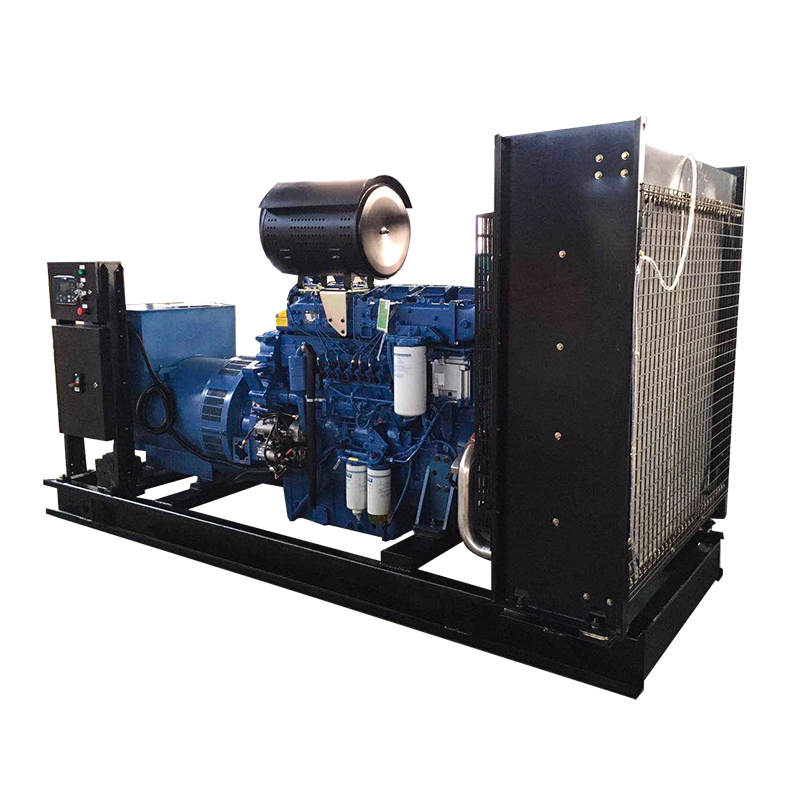 400 kW Guangxi Yuchai Diesel Generator Set400 kW prime-rated Yuchai set with YC6TD780-D31 engine and KC-400 alternator; compare load headroom and acoustic needs.View Product →
Acoustics is usually the difference between a permit and a complaint. An open set radiates around 95-105 dB(A) at one metre; a sound-attenuated canopy typically brings that down to 65-75 dB(A) at seven metres, which is what many residential and hospital boundary limits require.
Fuel dominates lifetime cost on any set that runs regularly. Industrial diesels in this class typically consume about 0.21-0.26 litres per kWh delivered, so a 400 kW set at full load burns roughly 85-105 litres an hour; the hourly figure falls at part load even though efficiency per kWh slips slightly.
Maintenance is conventional: first service at about 50 hours, then oil and filter changes every 250-500 hours or annually, coolant and belt checks, battery and charger testing, and air and fuel filter replacement. Two habits separate long-lived sets from short-lived ones.
Fuel quality is the third factor. Water and sediment reach the injection system faster than most operators expect, so a water separator and disciplined filter changes cost far less than a pump rebuild.
Hand this list to every supplier quoting a Yuchai diesel generator, and compare answers rather than headlines.
If the first two answers are vague, the power rating on the quotation is a guess. The same process, step by step, is set out in this guide on how to select diesel generator sets.
With the correct duty rating and maintenance, a well-built set of this class typically reaches 20,000-30,000 running hours before a major overhaul. Standby sets often stay in service for 15-20 years because their hours accumulate slowly.
Yes, provided it is quoted at prime rating, the continuous load stays within 70-80% of that rating, and maintenance follows running hours rather than calendar years.
A steady 300 kW continuous load points to roughly a 375-400 kW prime-rated set, which leaves headroom for starting surges and short peaks. The load list, not a rule of thumb, makes the final call.
Only if a measured noise limit requires one. Open sets are cheaper and easier to service; canopies are justified near housing, offices or hospitals, or wherever night-time limits are enforced.
Yangzhou Kangcheng Power Equipment Co., Ltd. has been building and integrating diesel generator sets since 2003 and holds ISO 9001 and ISO 14000 certification, with products inspected by the National Internal Combustion Engine Generator Set Quality Supervision and Inspection Center. The manufacturing range covers 7 kW to 2500 kW, including Yuchai-powered sets at 360 kW, 400 kW, 900 kW and 1000 kW.
Because engineering design, equipment installation, environmental noise reduction and technical service sit with the same company, the acoustic rating, base frame and control panel are specified alongside the engine rather than after it. Export orders are supported by independent import and export rights, so customs and spare parts documentation can be arranged with the set.
If the load list points to a larger frame, a 1000 kW Yuchai set is the next step up, and the wider diesel generator set range covers every platform the company builds. Bring the duty rating, running hours and noise limit to the enquiry, and the specification conversation gets considerably shorter.
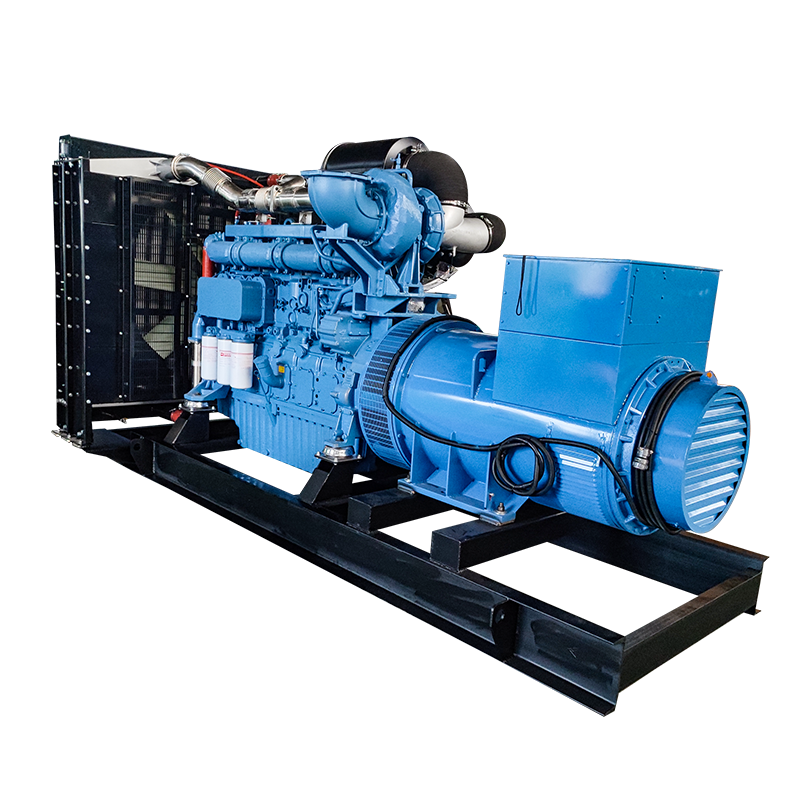 1000 kW Guangxi Yuchai Diesel Generator Set1000 kW Yuchai set with YC6TF1660-D31 engine and KC1000-4 alternator; detailed specs suit larger primary or standby power enquiries.View Product →
Engineering Support Beyond the Generator

Whether you need standard generator sets or have complex engineering projects, our team can provide you with professional support.
Recommended
Experienced staff and experts are always available to provide you with professional guidance and solutions to technical problems.