Yangzhou Kangcheng Power Equipment Co., Ltd.
Wholesale genset diesel generator Manufacturer2026-10-23
Content
The engine is rarely why a Weichai diesel generator fails its site acceptance test. In most of the failure reports we review, the cause is one of three specification errors: the load was measured in kVA but ordered in kW, the alternator was matched to the engine's standby figure instead of its prime figure, or the control and protection package was never written into the contract. Fix those three and a Weichai-powered set becomes one of the more predictable purchases in the diesel genset market.
Weichai builds generator-drive diesels that also serve trucks, construction machinery and marine applications, so fuel systems, filters and service knowledge usually exist in a market before the genset arrives. Buyer attention is better spent on the package around the engine: alternator, control panel, cooling, enclosure and documentation.
The generator-drive range runs from small four-cylinder families such as the WP2.3D, WP3.2D and WP4.1D, through the WP6D, WP7D, WP10D, WP12D and WP13D six-cylinder engines, into the 6M, 8M, 12M, 16M and 20M series used on large projects. Frequency and voltage come from the alternator and control panel, not the engine, so the same base engine can be packaged for 50 Hz or 60 Hz markets.
Two engine characteristics decide behaviour under load. Torque reserve is documented at roughly 30-40% on some Weichai generator engines, which helps recovery after a block load such as a chiller, crusher or large pump starting. Specific fuel consumption sits around 200-215 g/kWh at rated load in this class; on a 500 kVA set running twelve hours a day, a 1% difference works out at roughly 300 litres a year.
Governor type belongs on the enquiry sheet. Smaller WP-series units may be mechanically or electronically governed, while larger M-series engines use electronic management with CAN bus output. Load sharing, remote monitoring and SCADA integration should be confirmed before the order is placed, not after the container arrives.
Our Weichai Power generator sets sit on a production platform that covers 7 kW to 2500 kW. Four ratings are held as catalogue models: 140 kW, 180 kW, 400 kW and 800 kW.
| Rated output (kW) | Standby kVA at 0.8 PF | Usual duty | Where it fits |
|---|---|---|---|
| 140 | 175 | Standby, prime | Retail sites, telecom shelters, small pump sets |
| 180 | 225 | Standby, prime | Workshops, hotels, farms, clinics |
| 400 | 500 | Prime | Factories, cold stores, construction sites |
| 800 | 1000 | Prime, continuous | Mining, plant supply, district and utility support |
The 140 kW and 180 kW sets are usually ordered as standby units for retail sites, telecom shelters, clinics and farm pumping, where the load mixes lighting, refrigeration and small motors. The 400 kW and 800 kW sets go out as prime power for factories, cold stores, construction and mining, where the machine may run a full shift rather than a few hours a month.
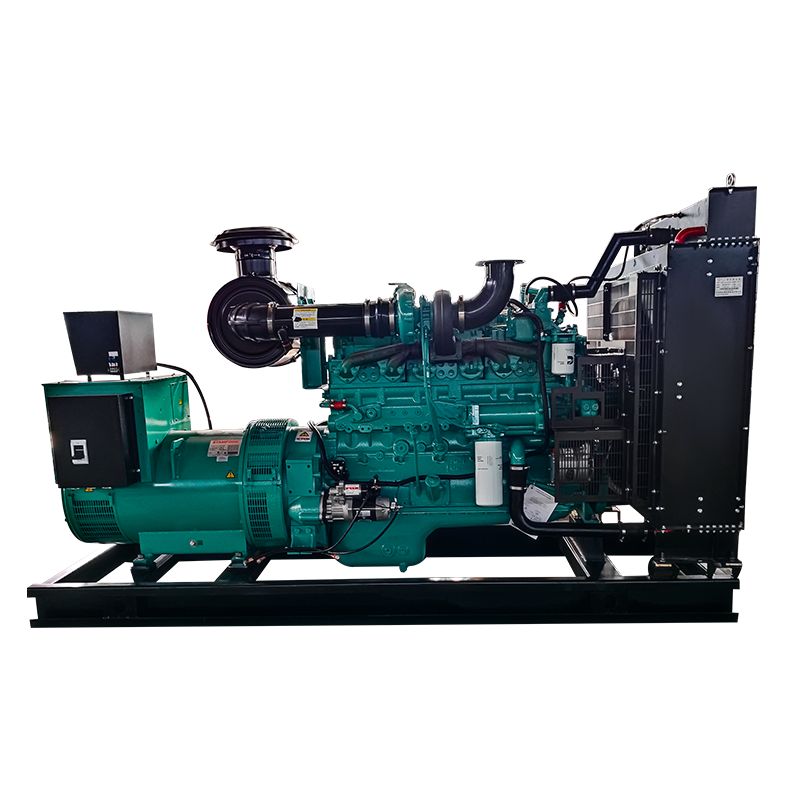
 140 kW Weichai Diesel Generator Set for Standby PowerA 400/230 V three-phase standby option for retail, telecom, clinic and farm loads, detailed with WP6D167E200 engine and KC140-4 alternator.View Product →
Ratings above 800 kW are built to order on the same platform and listed on our Weichai Power generator sets page.
Three figures decide the rating; a rule of thumb decides the margin.
Then derate for the site. As a working rule, expect about 1% output loss per 100 m above 1,000 m elevation and roughly 2% per 5 °C above 40 °C ambient, depending on the engine model and cooling package. A 400 kW set in a 45 °C plant room at 1,500 m is not a 400 kW machine, and the alternator has to be chosen against the derated figure as well.
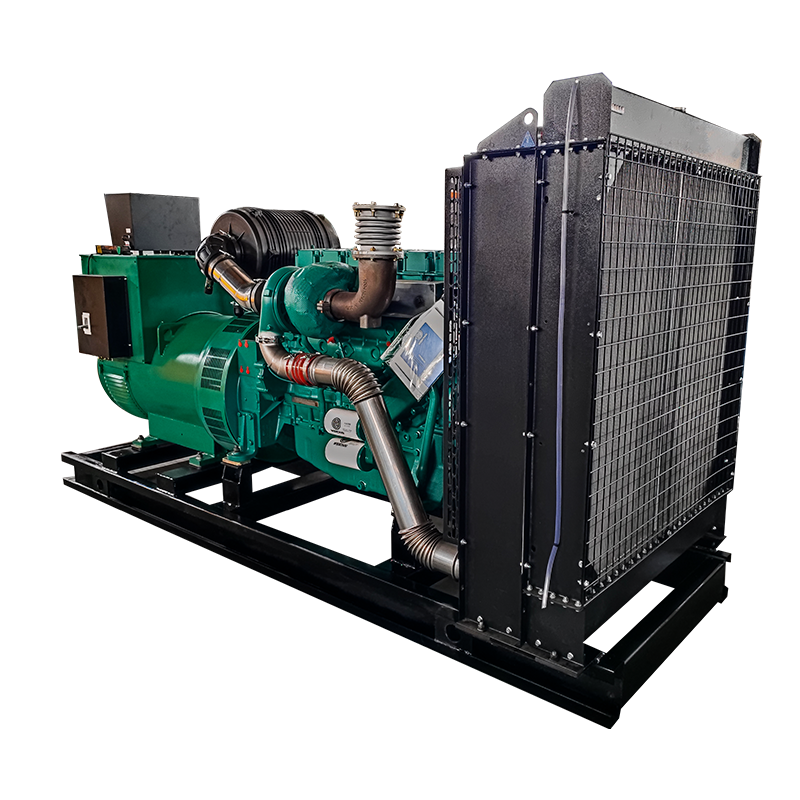 400 kW Weichai Diesel Generator Set with WP13D490E310 EngineListed for comparison when derating for altitude and temperature, with WP13D490E310 engine and KC400-4 alternator specifications.View Product →
The same load logic applies whichever engine brand you compare. Our walkthrough on how to select diesel generator sets covers the sequence in more detail.
The alternator is where budget quotes usually hide their savings. Four checks close that gap.
Alternator brands seen on Chinese-built sets include Stamford, Marathon and Siemens alongside domestic manufacturers. The brand matters less than the matched rating and the test data: a load bank report at 25%, 50%, 75% and 100% load says more than a badge.
At roughly 0.25 litres per kWh delivered at full load, a 140 kW set burns about 35 litres an hour, a 400 kW set about 100 and an 800 kW set about 200. Size the daily service tank for at least eight hours at expected average load, plus margin for settling and water separation.
Emissions rules follow the installation market, not the build market. EU non-road rules apply to most diesel gensets above 19 kW, the United States uses its own tier system, and other markets follow national standards that may be looser or silent. Ask for the emissions statement that matches the destination and file it with the shipping documents.
Cooling air and exhaust routing cause more commissioning delays than engine faults, so plan the room before the machine arrives.
These are the items buyers most often forget, and the ones that turn a good price into a bad project.
Quality paperwork is worth requesting at the same time. Our production is certified to ISO 9001 and ISO 14000, and each set is inspected against the national internal combustion engine generator quality supervision and inspection centre standard before packing.
Standard ratings typically ship in 15 to 30 days from a confirmed order; containerised and sound-attenuated packages take longer because the enclosure is built around the machine.
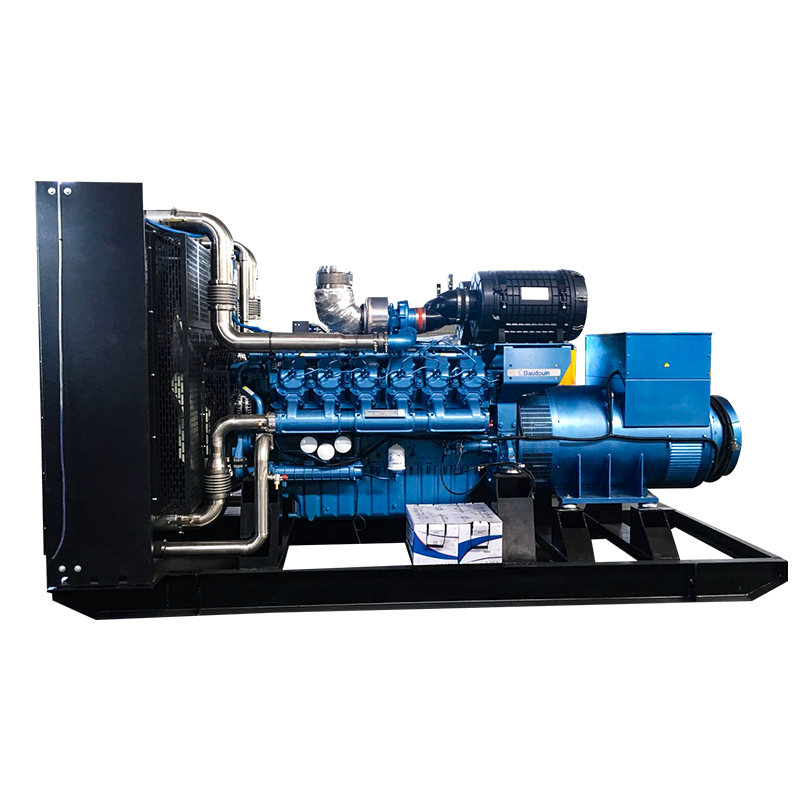 800 kW Weichai Diesel Generator Set with 12M26D902E200 EngineA high-output 400/230 V three-phase set with KC800-4 alternator, positioned for commissioning, noise treatment and longer enclosure package timelines.View Product →
Commissioning tests the last of the specification. A proper handover includes a no-load run, a load test at site conditions, protection threshold settings, a phase rotation check and recorded baseline fluid levels. Noise treatment is usually handled at the same time: a canopy for outdoor installation, or acoustic panels and a residential silencer inside a plant room.
Maintenance is deliberately boring: daily fluid checks, weekly belt and battery inspection, an oil and filter change at the first 50 hours, then the intervals in the engine manual. Sets that fail early are almost always sets that were never run at load during their first month.
Weichai generator engines span small four-cylinder units up to large M-series diesels, and complete sets are commonly built from about 7 kW to 2500 kW. Our catalogue ratings are 140 kW, 180 kW, 400 kW and 800 kW.
As a working figure, allow 0.25 litres per kWh delivered, so a 140 kW set at full load uses about 35 litres an hour and an 800 kW set about 200 litres. At 75% load the figures fall roughly in proportion.
A standby rating is for emergency use and normally carries no sustained overload, a prime rating allows continuous running with a short overload period, and a continuous rating is for constant load without overload. The rating you buy must match the hours you intend to run.
Yes, when it is ordered at a prime or continuous rating and the alternator, cooling package and fuel system are specified for that duty. Running a standby-rated set continuously will void most warranties and shorten engine life.
A Weichai diesel generator is a sound choice when the load is calculated honestly, the alternator is matched to the correct rating, and the package is specified in writing before the deposit is paid. The engine will do its part; the rest of the project is decided by the paperwork around it.
Send us a load list and your site conditions, and we will come back with a rating, an alternator match, a fuel estimate and a delivery schedule rather than a list of options to sort out yourself.
Engineering Support Beyond the Generator

Whether you need standard generator sets or have complex engineering projects, our team can provide you with professional support.
Recommended
Experienced staff and experts are always available to provide you with professional guidance and solutions to technical problems.