Yangzhou Kangcheng Power Equipment Co., Ltd.
Wholesale genset diesel generator Manufacturer2026-10-09
Content
A quotation lands on your desk for a 250 kW standby set: Perkins engine, a name-brand alternator, a 24-hour base tank, a digital controller. The engine badge is the line everyone reads first, and it is also the line that tells you the least about whether the set will actually carry your building.
The short answer first: a Perkins badge is a reasonable sign of build quality and parts availability, but it does not by itself say what the machine can do. What decides the outcome is the rating type printed next to it, how the alternator and governor are matched to that rating, the block loads your site applies, and how fast someone can put a fuel filter or an injector in your hand when the set is needed.
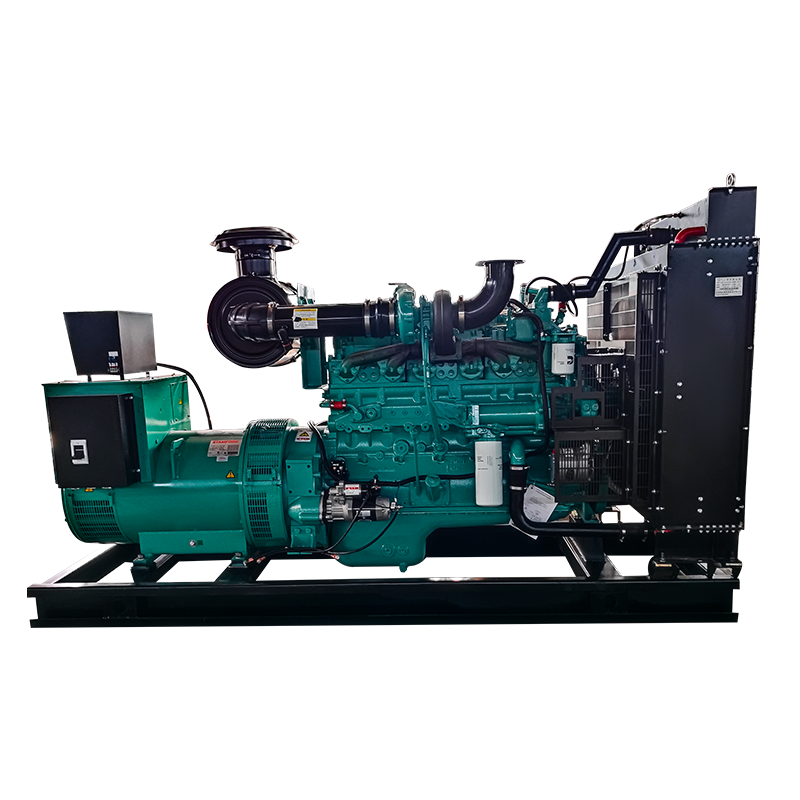
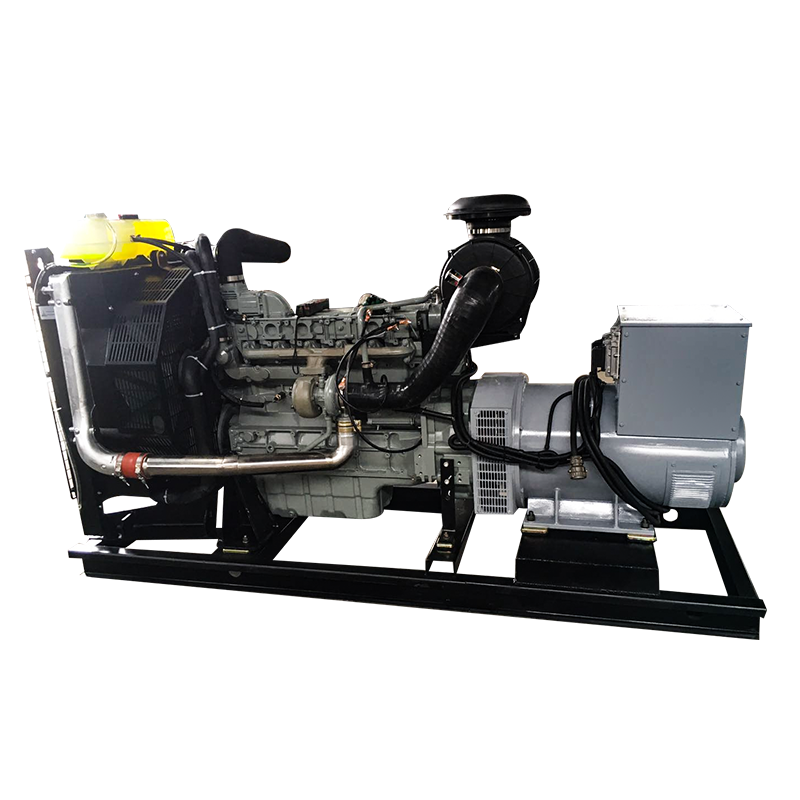
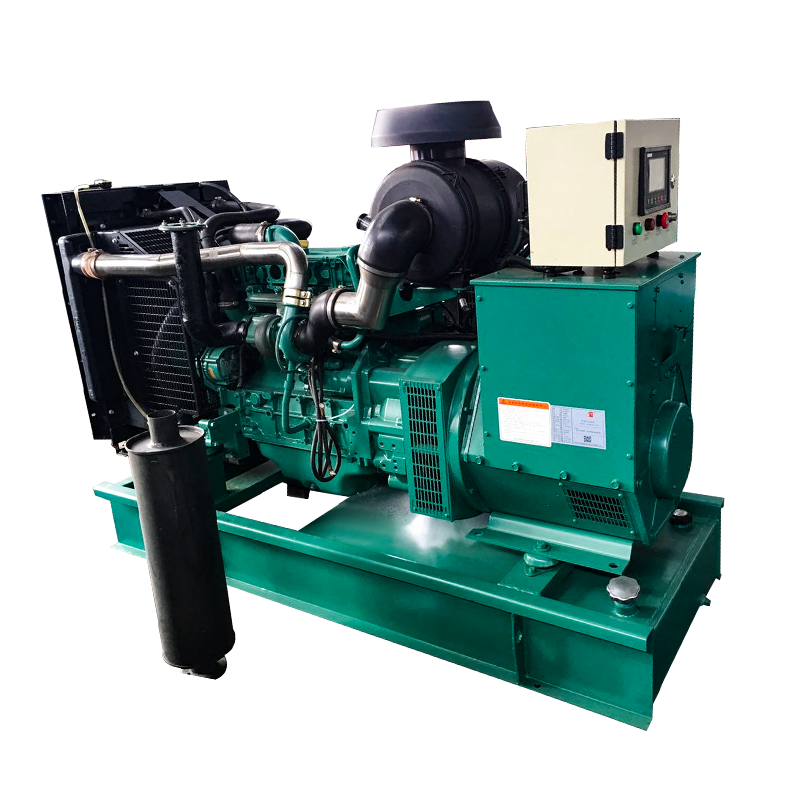
A Perkins engine does not leave the factory as a generator set. It is built as a power unit, complete with radiator, flywheel housing and SAE flange, ready to be coupled to an alternator. The finished set is the work of the packager: engine, alternator, coupling and baseframe, control panel, protection, fuel system, exhaust, and often an acoustic canopy.
Two suppliers can therefore quote the same Perkins engine and deliver very different machines. The variables that usually change the outcome are:
Perkins organises its power-generation engines into families, and the family name is the fastest way to place a quote. The table below is a rough map, not a guarantee.
| Engine family | Typical layout | Approximate genset output | Where it usually lands |
|---|---|---|---|
| 400 Series | 3-4 cylinder, 1.1-2.2 L | Roughly 10-45 kVA | Small standby, telecom shelters, pumps, small retail |
| 1100 Series | 3-6 cylinder, 3.3-7.0 L | Roughly 30-200 kVA | Clinics, offices, workshops, light industrial standby |
| 1500 Series | 6 cylinder, 8.8 L | Roughly 200-280 kVA | Commercial buildings, mid-size plants |
| 2000 Series | 6 cylinder, 13-15 L | Roughly 300-500 kVA | Hospitals, factories, data halls |
| 2800 Series | 6 cylinder, 18.1 L | Roughly 600-800 kVA | Large facilities, prime power, utility sites |
Two units carrying the same family name can still differ by rating type, so a 1106 engine quoted as standby may sit well above the same engine quoted as prime. If you are still working through the basics, a selection walkthrough helps you fix power class, load profile and site conditions before you commit to an engine family.
Three ratings in ISO 8528-1 do most of the work here.
The practical consequence is simple. A set sold as ESP and then used as the site's main power for 4,000 hours a year is being run outside its rating. It will still start and still generate, but it will wear faster, and any warranty claim will run into a wall.
Sizing matters just as much. Long runs below roughly 30% of rating load the engine lightly, cool it poorly and encourage carbon build-up in the exhaust. The usual sweet spot for a prime-rated set is an average load between 60% and 80% of rating. If your measured profile sits at 25%, a smaller set with a larger tank is often the better purchase than a big set idling its way through the year.
A mid-size diesel set typically needs around 0.26 L per kWh at full load, and more per kWh as load falls, because the engine's own losses stay roughly constant while the useful output drops.
At 75% load a 250 kW set burns about 53 L per hour. Run eight hours a day and that is roughly 2.5 tonnes of diesel a week, which is the figure that should drive tank size, bunded storage and refuelling contracts, not the 39 L per hour figure at half load.
A nameplate rating assumes reference conditions: around 25°C inlet air and low altitude. Move the set to 2,000 m or a 45°C plant room and the available output drops. A working rule of thumb is 2% to 4% of capacity for every 500 m above 1,000 m, and roughly 1% to 2% for every 5°C above 25°C, but the engine data sheet should have the final word, and the supplier should confirm capacity at your site conditions in writing.
Transient behaviour is the other half of the story. A site with three or four large motors starting together cares far more about voltage dip than about steady-state accuracy.
| Parameter | Figure worth specifying | Why it matters on site |
|---|---|---|
| Steady-state voltage | ±1% | Electronics, UPS input, control systems |
| Steady-state frequency | ±0.5% with electronic governing | Motors, timing-sensitive equipment |
| Transient voltage dip | 20% or less, recovering within 1.5 s | Direct-on-line motor starting |
| Transient frequency dip | 10% or less, recovering within 5 s | Lifts, compressors, chillers |
| Block load acceptance | Confirmed single-step load, not assumed | Restart after a mains failure |
| Derating at site conditions | Capacity guaranteed at your altitude and ambient | Plant rooms and high-altitude sites |
For a set run as prime or continuous power, fuel dominates everything else, and it is not close.
Read it as a procurement signal rather than precise accounting. The gap between an engine that burns 0.26 L per kWh and one that burns 0.30 L per kWh is far larger than the gap between two quoted capital prices. It is also why parts availability matters: a week of downtime on a prime-power site can cost more than a year of maintenance.
Perkins is one of several engine platforms a generator manufacturer can build around, and the 300-500 kVA band is where the overlap is heaviest. If your fleet already runs on another platform, or a specific Perkins rating is quoted at a long lead time, asking for the same output class with a different engine is a normal request rather than a compromise, provided the alternator, control panel and enclosure stay at the same specification. A 400 kW unit is a useful reference point, because that class appears across several engine families and is often where buyers start comparing platforms seriously.
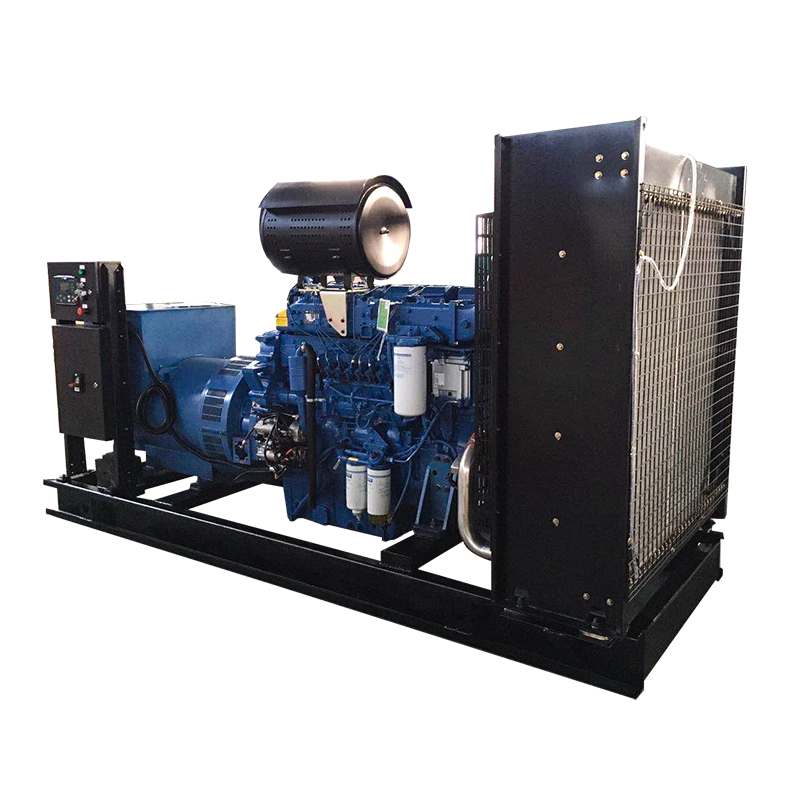
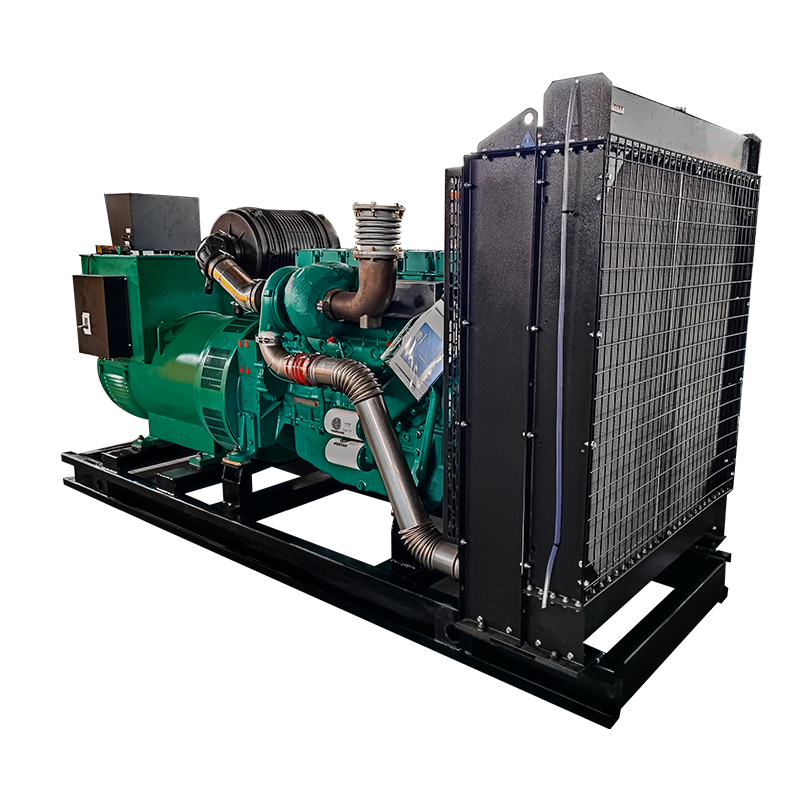 400 kW Weichai Diesel Generator Set with WP13D490E310 EngineA 400 kW, 50 Hz three-phase diesel set with Weichai WP13D490E310 engine and Kangcheng KC400-4 generator, useful when comparing 300–500 kVA platform options.View Product →
Perkins power-generation engines stop at the 2800 Series six-cylinder, which sits in the 600-800 kVA range. Once a project needs 900 kW or more for a data hall, a manufacturing plant or a district installation, the practical choice moves to a larger engine platform, and the design questions move with it: two-bearing alternators, paralleling controls, heavier switchgear, and a foundation that has to absorb a bigger block. Sizing in this range is rarely about one machine, because most sites end up paralleling two or three units for redundancy rather than buying a single large set.
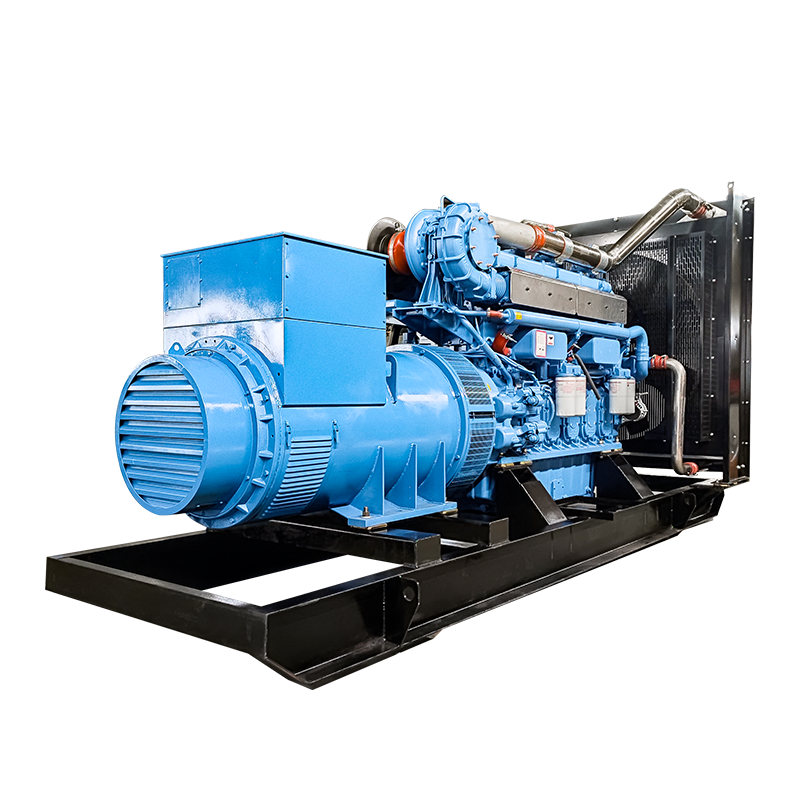 900 kW Guangxi Yuchai Diesel Generator Set with YC6C1520-D31 EngineA 900 kW, 50 Hz three-phase diesel set with Yuchai YC6C1520-D31 engine and Kangcheng KC900-4 generator, for projects needing 900 kW or more.View Product →
Yes, for the right rating. The 1100 and 2000 Series engines are common in commercial standby work, and the parts network is one of the widest in the industry. The condition is that the set is specified as ESP for standby duty, matched to an alternator that can carry your largest single step load, and serviced on schedule.
Cylinder count and displacement: about 3.3 L in three cylinders against 4.4 L in four. In genset terms that usually means roughly 30-60 kVA against 40-80 kVA, with the four-cylinder version accepting a heavier block load in the same class.
Roughly 27 L per hour at full load, about 22 L at 75% and 16 L at half load. If the set is prime-rated, budget from the 75% figure, because very few sites run continuously at nameplate.
Most modern Perkins power-generation engines are specified at 250 to 500 hours between oil and filter changes, depending on oil quality and fuel. Dusty sites and poor fuel push you to the lower end, and the engine manual always overrides a rule of thumb.
If you take one thing from this, take the order of the questions: rating type first, then load profile and block loads, then alternator and controls, then the engine badge. Perkins engines are well suited to standby and prime duty in the 10-800 kVA range, and choosing one is a sound decision when the rest of the specification is held to the same standard. The full range of diesel generator sets shows what is available at each output class, and a manufacturer's engineers can confirm capacity at your site conditions before an order is placed.
Engineering Support Beyond the Generator

Whether you need standard generator sets or have complex engineering projects, our team can provide you with professional support.
Recommended
Experienced staff and experts are always available to provide you with professional guidance and solutions to technical problems.