Yangzhou Kangcheng Power Equipment Co., Ltd.
Wholesale genset diesel generator Manufacturer2026-11-10
Content
Imagine a storm has knocked out power, the portable generator is running in the driveway, and someone has a heavy cord with two male ends. The plan is simple: plug one end into the generator and the other into a wall outlet so the house “lights up.” The short answer is no. You cannot safely—or legally in most jurisdictions—backfeed a generator through an ordinary outlet, a dryer receptacle, or any existing wall socket. The outlet is designed as a power source for appliances, not as an inlet for a generator. Using it that way bypasses the isolation and overcurrent protection that make a home electrical system predictable.
Backfeeding means sending power from a generator into the home wiring in the reverse direction. In a normal circuit, electricity travels from the utility, through the main panel, out to a receptacle, and into a load. A generator inlet and transfer switch are designed to reverse that flow only after the utility supply has been disconnected. A wall outlet is not. The “suicide cord” used for this shortcut leaves exposed live pins, and the branch circuit breaker may not isolate both the hot and neutral conductors. It also does not prevent the generator from energizing the utility line.
There is a practical limit as well. A standard 120V receptacle is often rated for 15A or 20A, which is roughly 1.8kW to 2.4kW. A 7kW generator can produce far more than that. The outlet, cord, and branch circuit become the bottleneck, so the breaker may trip, the plug may overheat, or the generator may run at a poor load. None of those outcomes is a safe backup plan.
| Method | What it does | Main risk | Accepted? |
|---|---|---|---|
| Existing wall outlet with a double-male cord | Sends generator power backward through a branch circuit | Exposed live pins, no utility isolation, overloaded outlet | No |
| Dryer or range outlet used as an inlet | Uses a 240V receptacle to feed the panel | No approved inlet or interlock; shock and backfeed risk | No |
| Transfer switch or breaker interlock | Disconnects utility supply before generator supply is connected | Requires correct installation, listed equipment, and load planning | Yes, when properly installed |
The biggest danger is not that the generator will fail. It is that the generator will work and send voltage where nobody expects it. A backfed circuit can energize the main panel, the utility service, and even the lines down the street. Linemen may treat a dead line as de-energized while repairing storm damage. If a generator is feeding that line, the result can be fatal.
Insurance and code enforcement matter too. If a fire or injury is traced to an improvised backfeed, the property owner may face denied claims, fines, or liability. A licensed electrician can install a safe connection, but no electrician should approve a male-to-male cord through a standard outlet.
A dryer outlet is still an outlet. It may be 240V and rated for 30A, but that does not make it a generator inlet. The correct connection point is a dedicated generator inlet box wired to a transfer switch or a listed breaker interlock. The inlet has male pins recessed inside a housing, so the live parts are not exposed when the cord is disconnected. A dryer receptacle has female slots designed to receive a plug, not to be backfed from a generator.
A 110V receptacle is even less suitable. It limits the load to a small branch circuit and creates voltage-drop and overload problems. Some people believe that turning off the main breaker makes the outlet method safe. It does not. A main breaker is not a transfer switch, and it does not guarantee isolation of the neutral or prevent accidental re-energization. The safe sequence is mechanical and deliberate: utility off, generator on, and only through equipment listed for that purpose.
For a permanent or semi-permanent backup, the connection point should be a generator inlet box wired to a transfer switch. A manual transfer switch is common for smaller sites because the operator physically selects utility or generator power. An automatic transfer switch is used where downtime is costly and the changeover must happen quickly. A breaker interlock is another listed option: it mechanically prevents the main breaker and the generator breaker from being closed at the same time.
The generator still has to match the load. A 30 kW diesel generator set may suit a small workshop, farm, or retail site with selected essential loads. Sizing should be based on running kW, starting kVA, voltage, phase, and whether the load is single- or three-phase. Do not size from the generator output alone; size from a load schedule and the starting current of motors, pumps, and compressors.
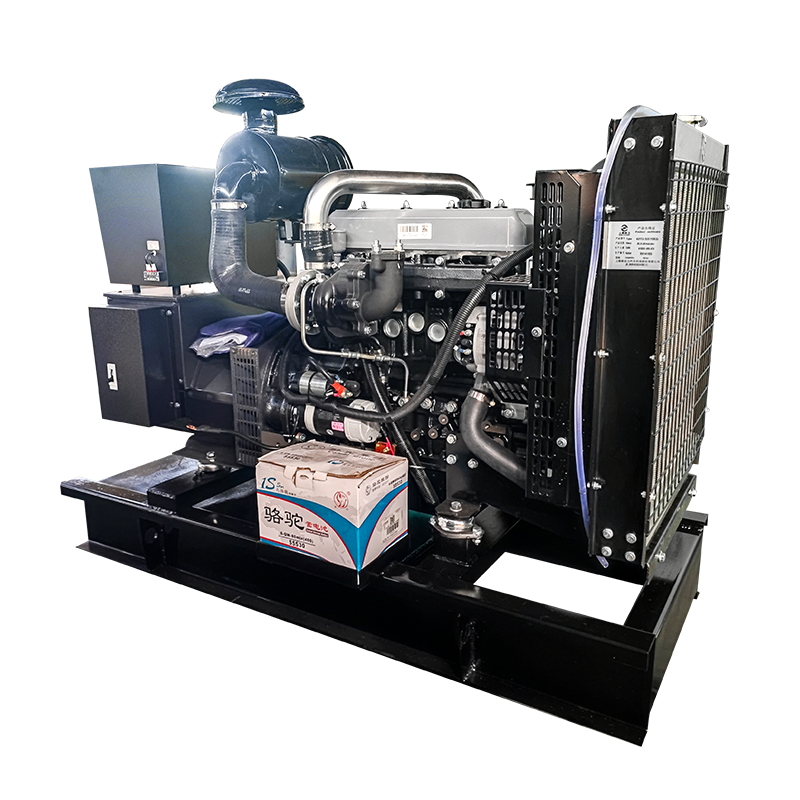
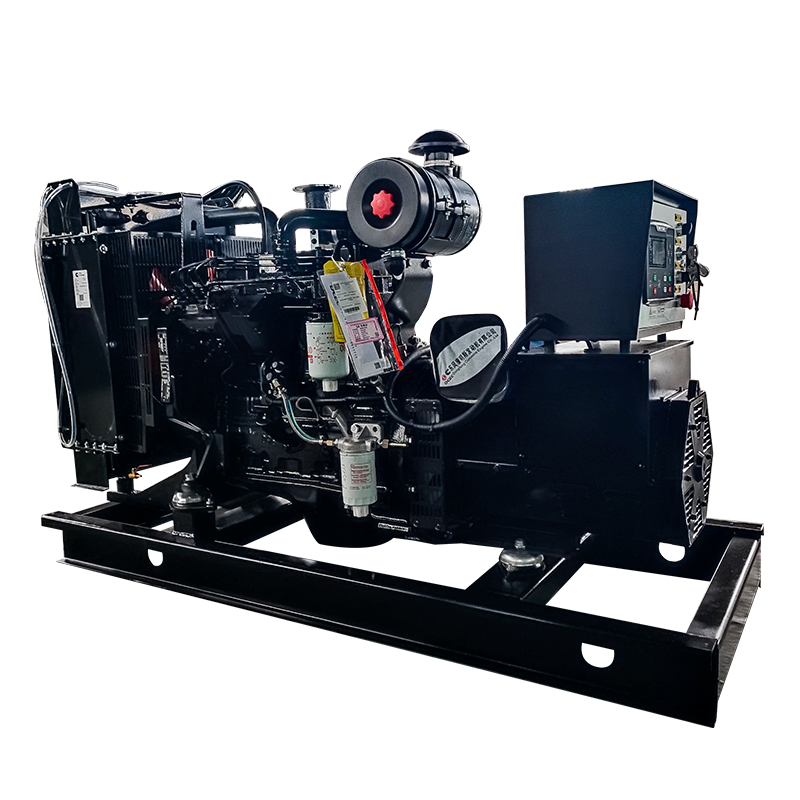 30 kW Dongfeng Cummins Diesel Generator SetA compact 30 kW diesel set for small essential-load backup, with load-schedule sizing facts and key electrical and fuel specifications.View Product →
For larger facilities, the calculation becomes more demanding. Essential loads may include refrigeration, IT equipment, lighting, ventilation, and motor-driven machinery. The transfer equipment must be rated for the available fault current and installed according to local electrical codes. The generator should also have the right voltage configuration, neutral bonding arrangement, and control interface for the transfer switch.
Before ordering equipment, review the load schedule and read our guide to sizing a diesel generator set. Check whether the site needs single-phase or three-phase power, what the largest motor starting kVA is, and whether the generator will run continuously or only during outages. Confirm fuel storage, exhaust routing, noise limits, and service access. A generator that is correctly sized but poorly installed is still a risk.
For a commercial site with essential loads in the 100–150 kW range, a 150 kW diesel generator set is a common starting point, subject to a load study. The final selection should include alternator capacity, voltage regulation, protection settings, and the transfer switch rating.
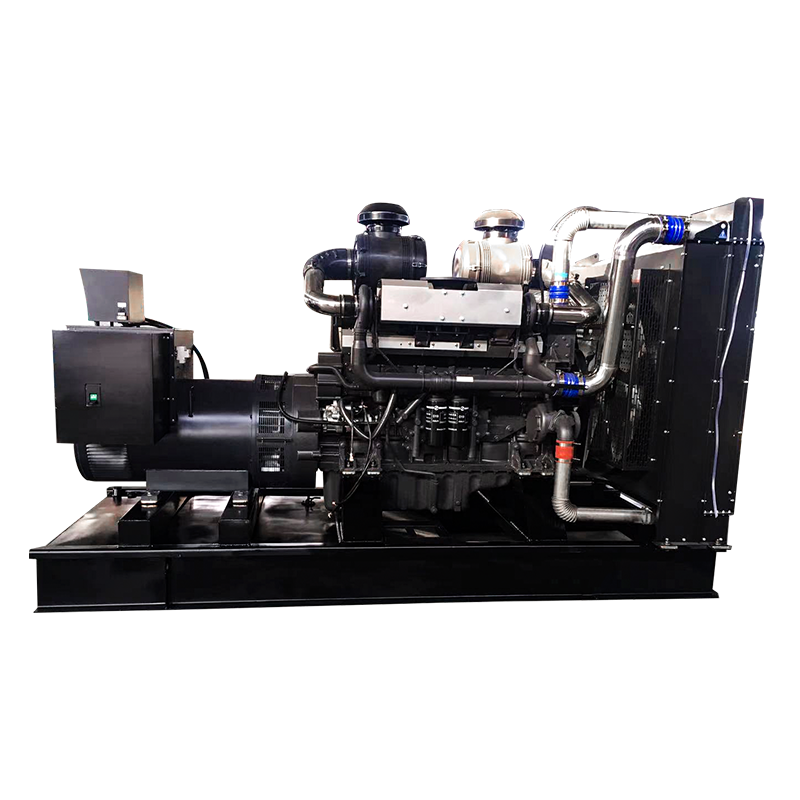
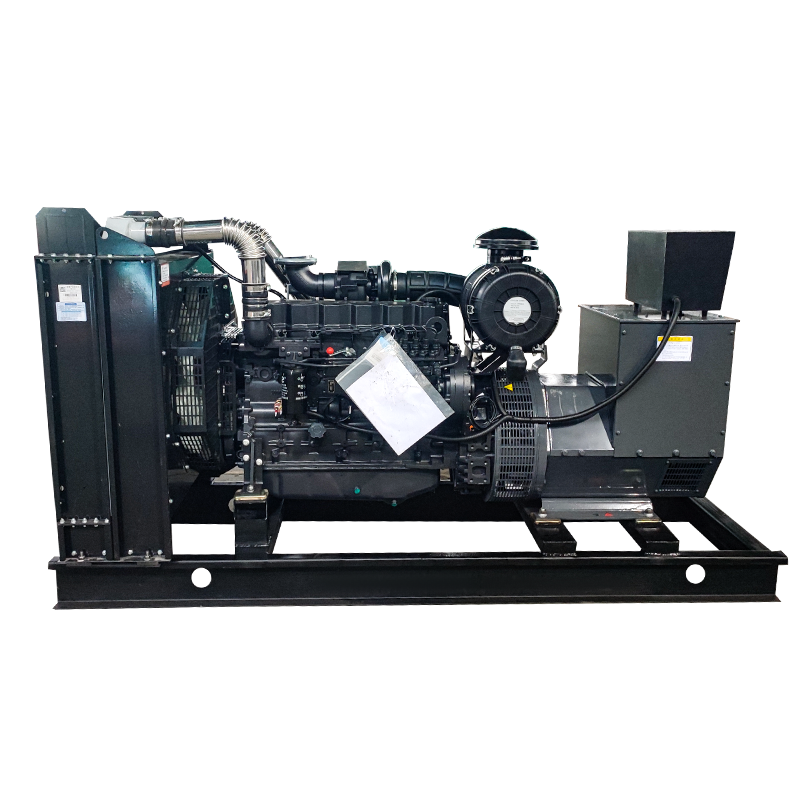 150 kW Shanghai Diesel Generator SetA 150 kW diesel set for commercial backup planning, featuring a Shanghai engine, 270 A three-phase output, and details for load-study comparison.View Product →
For industrial backup where 400 kW is required, the design should include switchgear coordination, cable sizing, ventilation, and a clear maintenance plan. A larger set is not automatically better; it must match the load profile and the available space.
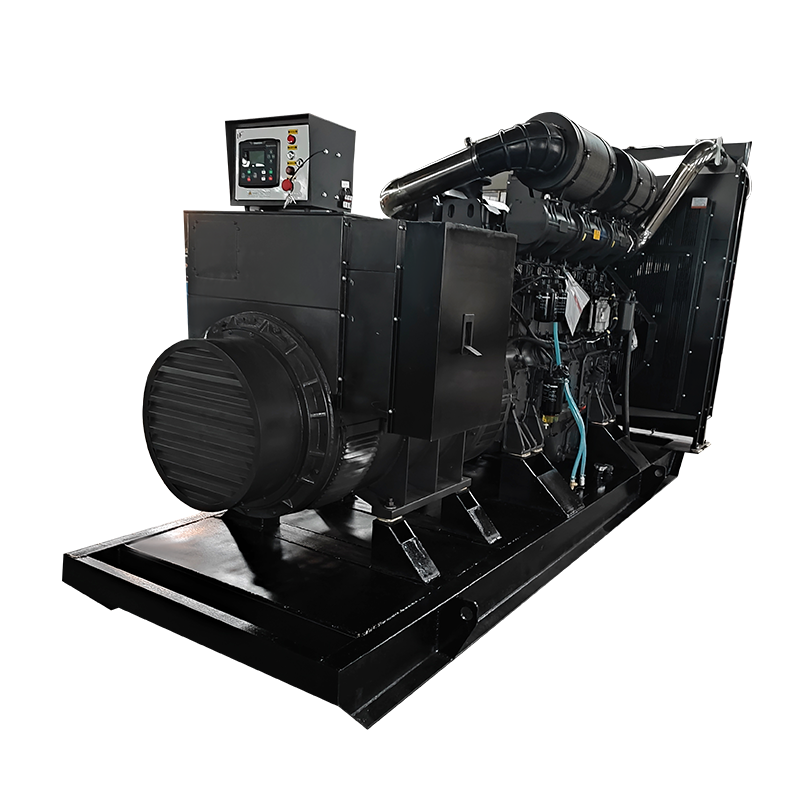
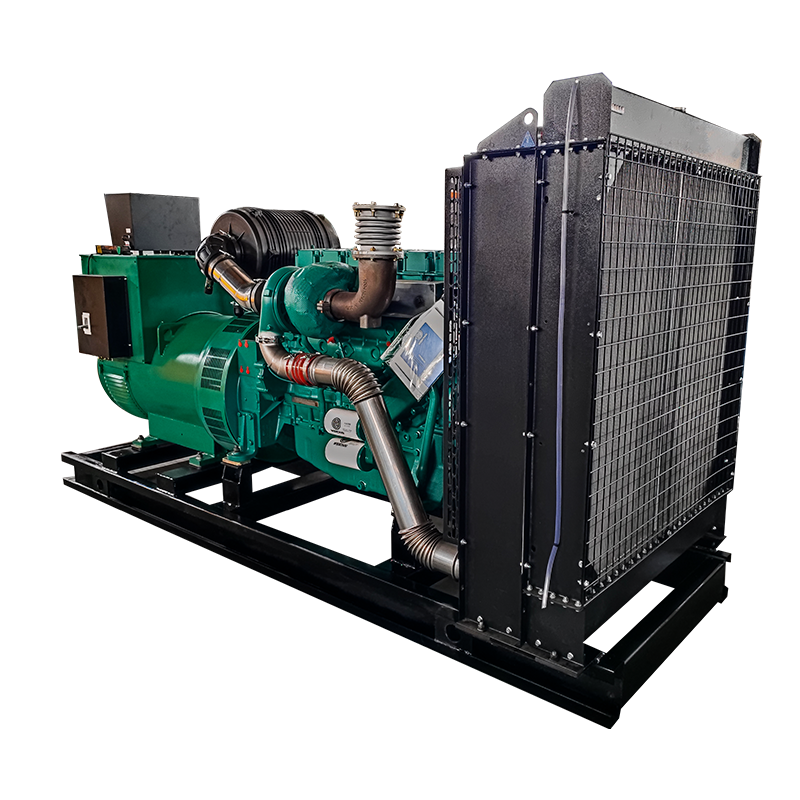 400 kW Weichai Diesel Generator SetA 400 kW three-phase diesel set for industrial backup planning, with Weichai engine, 720 A output, and specifications relevant to switchgear and grounding review.View Product →
Also confirm the neutral and grounding arrangement. A portable generator used with a transfer switch may need a switched neutral or a separately derived system, depending on the installation. These details are not optional. They determine whether protective devices operate correctly and whether the generator can be connected without creating a parallel path to the utility.
No. A 110V outlet is a branch-circuit receptacle, not a generator inlet. It cannot safely carry the generator output, and it does not isolate the utility supply.
Not reliably. A main breaker alone is not a transfer switch or interlock. The safe method is a listed transfer switch or a breaker interlock that prevents utility and generator supplies from being connected at the same time.
No. A cord with two male ends creates exposed live pins and bypasses every safety layer. It should not be used, stored, or improvised.
No. A single outlet circuit is limited by its breaker, wiring, and receptacle rating. It cannot distribute a generator’s full output across a home panel, and it creates a serious backfeed hazard.
Use a generator inlet box, a listed transfer switch or breaker interlock, and a cord sized for the generator. The installation should be checked by a qualified electrician and matched to the generator’s voltage, phase, and current rating.
A safe backup system is designed, not improvised. If you already own a generator, the next purchase should be the correct inlet and transfer equipment, not a double-male cord. If you are selecting a diesel generator set for a home, shop, or facility, start with the load schedule and the connection method. That order keeps the installation code-compliant, keeps utility workers out of danger, and keeps the generator useful when the grid is down.
Engineering Support Beyond the Generator

Whether you need standard generator sets or have complex engineering projects, our team can provide you with professional support.
Recommended
Experienced staff and experts are always available to provide you with professional guidance and solutions to technical problems.