Yangzhou Kangcheng Power Equipment Co., Ltd.
Wholesale genset diesel generator Manufacturer2026-11-20
Content
The enquiry arrived as a single line: 480 kW standby, 400/230 V, 50 Hz, installed in a basement plant room reached through a 3.2 m door, with a residential boundary nine metres from the exhaust outlet. None of those numbers is unusual individually, and yet no standard catalogue set satisfies all of them at once. The door rules out a 20 ft container canopy. The boundary distance rules out a 75 dB(A) canopy. The basement rules out a remote radiator unless the ducting is designed in from the start.
That is the practical definition of custom generator solutions: the electrical rating is only the first figure, and every remaining decision comes from the site. In a genuinely custom build, canopy length, radiator position, exhaust routing, fuel tank arrangement, control interface and documentation package are all set by the installation rather than by a catalogue page. Get those six right and commissioning is quiet. Get one wrong and the set arrives, fits nothing, and the schedule loses weeks.
Yangzhou Kangcheng Power Equipment builds diesel generator sets from 7 kW to 2500 kW in Jiangdu District, Yangzhou, matching engines from Cummins, Deutz, Weichai, Yuchai, Shanghai Diesel and Pangu with Stamford, Marathon, Siemens and domestic alternators, and wrapping engineering, installation, acoustic treatment and technical service around the set itself. That combination is what separates an engineered solution from a repainted catalogue unit.
The nameplate rating is the last decision, not the first. Six measurements drive the design, and a supplier who quotes without asking for them is guessing on your behalf.
| Input | What it changes in the design | Cost of skipping it |
|---|---|---|
| Measured load profile (kW, kVA, power factor, running hours) | Prime or standby rating, plus margin over the largest motor | A set run above roughly 70% of prime rating continuously wears early and shortens overhaul intervals |
| Largest motor start (kVA, direct-on-line or soft start) | Alternator frame, excitation and sometimes the engine size | Voltage dip trips contactors, and the set gets blamed for a starting problem |
| Site altitude and ambient temperature | Derate applied to engine and alternator output | Eight to fifteen percent of capacity disappears above about 1000 m or 40 °C without anyone noticing on paper |
| Noise limit at the nearest receptor, not at 1 m | Canopy type, attenuation grade, ventilation path | A canopy that reads well at 1 m is still audible at nine metres |
| Fuel autonomy in hours at rated load | Base-frame tank volume or a separate bulk tank | An undersized integral tank means refuelling at three in the morning |
| Transport and access limits | Enclosure length, split-canopy design, modular assembly | The unit cannot enter the building it was bought for |
Read that table from the right column, because the risk lives there. Most disputes on diesel genset projects are not electrical failures; they are capacity assumptions that were never checked against a measured site condition.
Custom work is rarely exotic. It is ordinary sites with one hard constraint, and the same handful of requests keeps coming back.
Before any of this reaches a drawing, the load calculation has to be solid. The guide on how to select diesel generator sets covers the sizing baseline that the custom options sit on top of.
Platform choice usually follows three practical criteria: a rating held at the duty the site actually needs, spare parts reachable inside the client's maintenance radius, and a service route that reaches the door within a working day. Power band then narrows the catalogue.
| Engine platform | Ratings listed | Check before quoting |
|---|---|---|
| Deutz | 24, 128, 160, 180 kW | Whether the smallest frame still covers your starting kVA |
| Dongfeng Cummins | 30, 132, 250, 400 kW | Derate figures at site altitude and summer ambient |
| Shanghai Diesel | 34, 150, 400, 800 kW | That one platform family really does cover both ends of your need |
| Weichai Power | 140, 180, 400, 800 kW | Fuel quality assumptions against the injection system fitted |
| Chongqing Cummins | 260, 360, 500, 600 kW | Canopy length against the access route, not just the rating |
| Guangxi Yuchai | 360, 400, 900, 1000 kW | Lifting plan and foundation loads agreed early |
| Chongqing Pangu | 1320 kW | Transport route, crane capacity and delivery window |
A 500 kW frame is roughly the point where canopy length starts to matter more than engine badge, because enclosure, radiator and exhaust all grow faster than the electrical rating suggests.
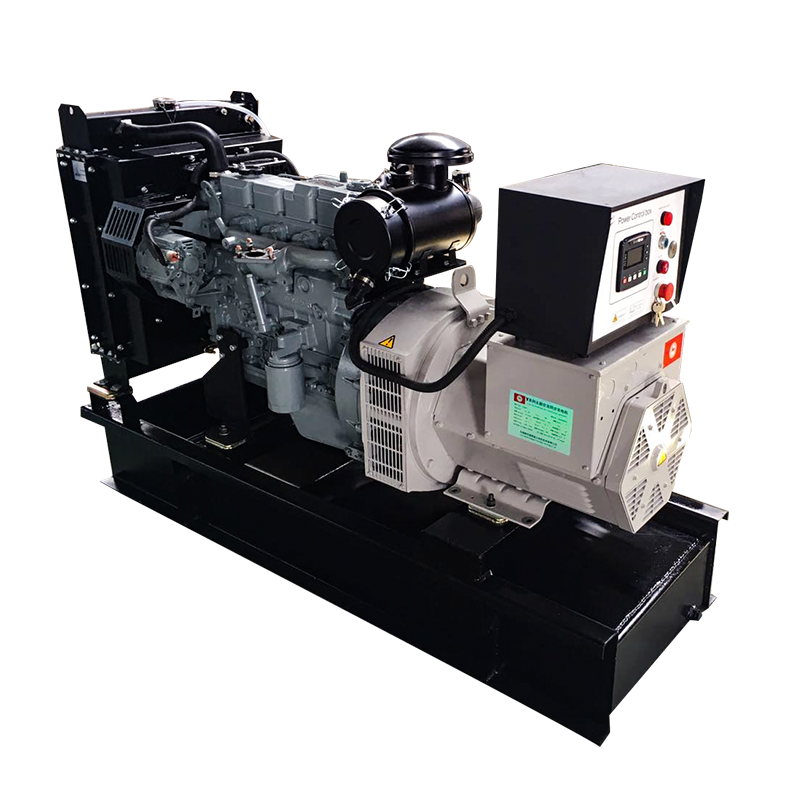
 500 kW Chongqing Cummins Diesel Generator SetA 500 kW Cummins-powered set with 19 L engine and Kangcheng alternator; enclosure, radiator and exhaust dimensions are key at this frame size.View Product →
At the far end of the range, the 1320 kW frame is a transport and foundation decision as much as an electrical one, and it should be agreed with the site contractor before the drawing is frozen.
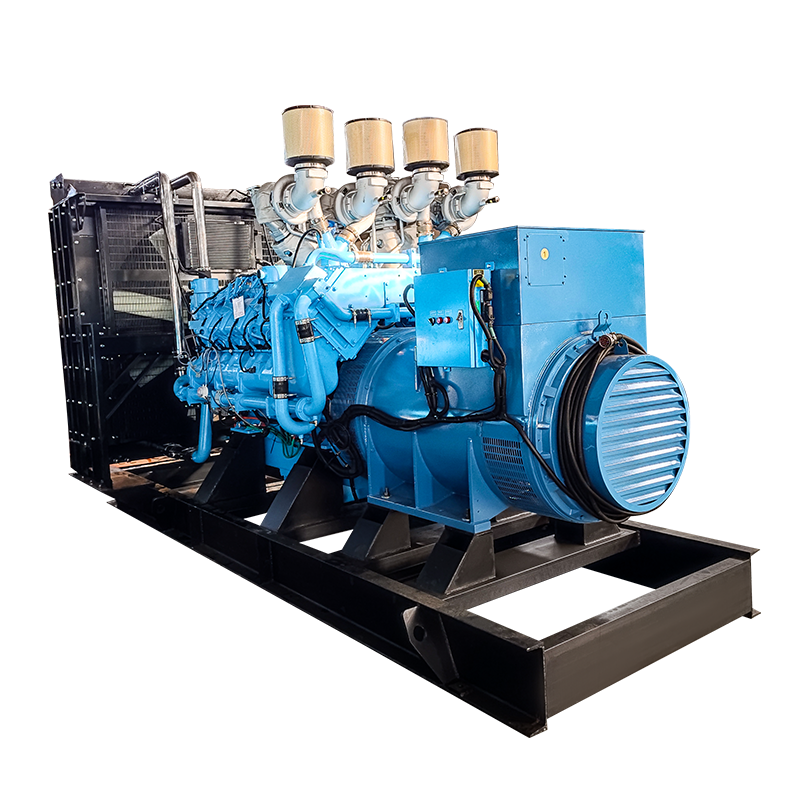 1320 kW Chongqing Pangu Diesel Generator SetThe 1320 kW Pangu set uses a 53.8 L V10 engine and Kangcheng alternator; transport and foundation planning are as important as its electrical rating.View Product →
Around 800 kW, the real question is usually single large unit versus two smaller ones; the answer depends on redundancy policy and on whether the load can be split.
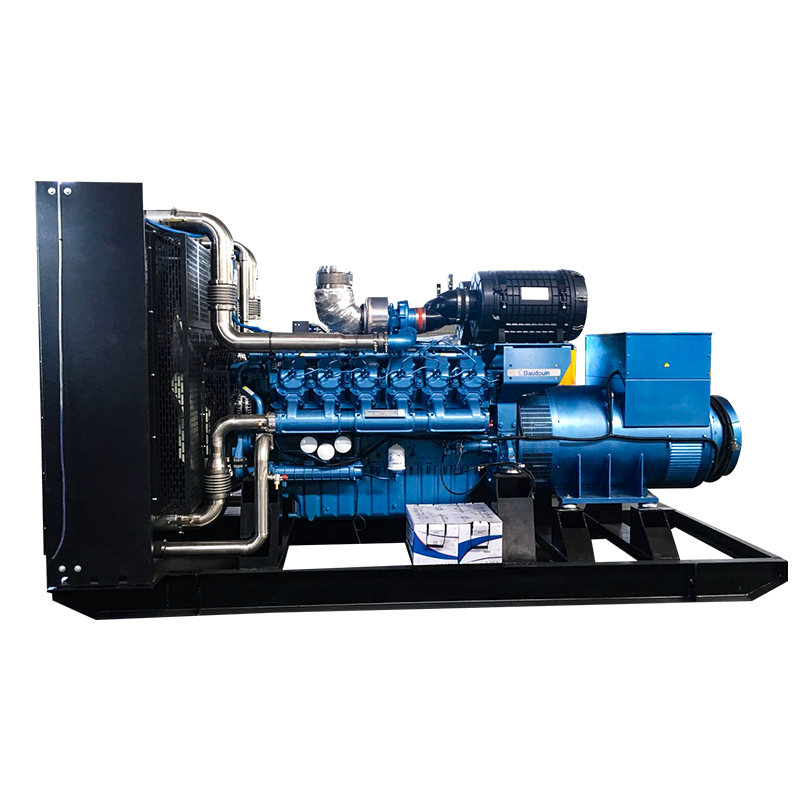 800 kW Weichai Diesel Generator SetThe 800 kW Weichai set uses a 31.8 L V12 engine and Kangcheng alternator; single-unit redundancy and enclosure sound design are key considerations.View Product →
Sound data measured at one metre tells you almost nothing about whether a neighbour will complain. What matters is the level at the nearest receptor after distance, barriers and terrain, and that is the figure the enclosure should be designed against.
The paperwork is where export projects lose the most time, and almost all of it is avoidable. Confirm the destination voltage, frequency, port and required document set before the proforma invoice, not after.
Kangcheng has been a qualified manufacturer verified by the national internal combustion engine generating set quality supervision and inspection centre since its founding, and holds ISO9001 quality management and ISO14000 environmental management certification along with an independent import and export licence. In practice, ask for the factory load-bank test report with readings at 75% and 100% load, the wiring diagram set, the alternator temperature-rise class, and an operation and maintenance manual in the destination language. Where a set is built to a prime or standby definition, state which standard the rating follows, so that two suppliers quoting 800 kW are quoting the same 800 kW.
Approval is the last cheap moment in the project. These are the questions that surface problems while they can still be fixed on paper.
Engineered diesel sets typically run four to eight weeks after drawing approval, and containerised or multi-unit projects run longer. Treat that as an industry range and confirm against your own schedule before committing dates to a client.
No. A set running below roughly 30 to 40% of its rating for long periods suffers wet stacking and poor fuel economy. Correct sizing with a modest margin beats a large margin every time.
Not by re-rating an existing machine. Frequency follows engine speed, so a 60 Hz export unit is built and tested at 60 Hz with its own alternator and control parameters.
Weather exposure, noise limits and access. Indoors, an open set inside a purpose-built acoustic room often outperforms a canopy and is easier to maintain.
Custom generator solutions are not built from a wish list; they are built from measurements. Load profile, starting duty, altitude, boundary noise, fuel autonomy and access route together define the machine, and once those six are on the table the quotation compares like with like. As a diesel generator set manufacturer working from 7 kW to 2500 kW across multiple engine platforms, the useful conversation starts with the site, not the brochure, and ends with a drawing the installer can actually build.
Engineering Support Beyond the Generator

Whether you need standard generator sets or have complex engineering projects, our team can provide you with professional support.
Recommended
Experienced staff and experts are always available to provide you with professional guidance and solutions to technical problems.