Yangzhou Kangcheng Power Equipment Co., Ltd.
Wholesale genset diesel generator Manufacturer2026-10-16
Content
A 400 kW genset ordered on standby rating, then asked to carry a full production shift, usually throws a coolant temperature alarm within three weeks. The mistake repeats every year, and the cause is nearly always the same: the selection sequence was run backwards.
Here is the conclusion first. Choosing a Shanghai Diesel Engine generator set is a process of fixing the load and the duty regime, then deriving the power rating and the engine family from that, and only at the end comparing suppliers and prices. The four points in a typical Shanghai Diesel catalogue, 34 kW, 150 kW, 400 kW and 800 kW, sit in very different operating worlds. Treating them as one machine in four sizes is the most expensive misunderstanding in this category.
Shanghai Diesel Engine (SDEC) is a Chinese industrial diesel engine platform whose generating-duty variants appear widely in domestic gensets. When a buyer says "Shanghai Diesel Engine generator set", what is really being bought is a package: the engine sets displacement, cylinder count, governor type and spare-parts supply chain; the alternator sets voltage regulation and steady-state deviation.
In practice the range narrows to a small number of power nodes. The table below is not a technical datasheet, it is a duty-regime map, because the same engine platform behaves very differently depending on whether it is asked to run for one hour a month or twelve hours a day.
| Catalogue rating | Duty regime it suits | Typical load situation |
|---|---|---|
| 34 kW | Standby, short runs | Small retail units, control and monitoring supplies, single-equipment backup |
| 150 kW | Standby, occasional prime | Small workshops, hotels, pumping stations, livestock facilities |
| 400 kW | Prime or standby | Whole-plant backup, injection moulding lines, machining shops, commercial buildings |
| 800 kW | Prime, parallel operation | Campus-level backup, continuous production, multi-unit paralleling |
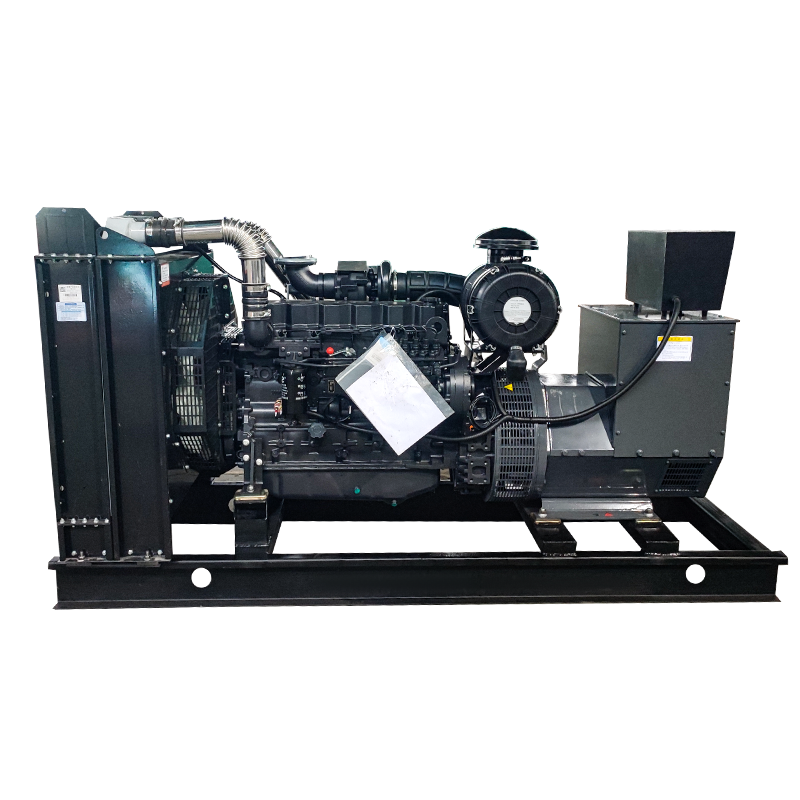
The smallest of these, 34 kW, is often installed where floor space is tight and the enclosure decision matters more than the engine choice. It commonly runs open-set or in a sound-attenuated canopy, and its real constraint is usually ventilation and cable routing rather than output.
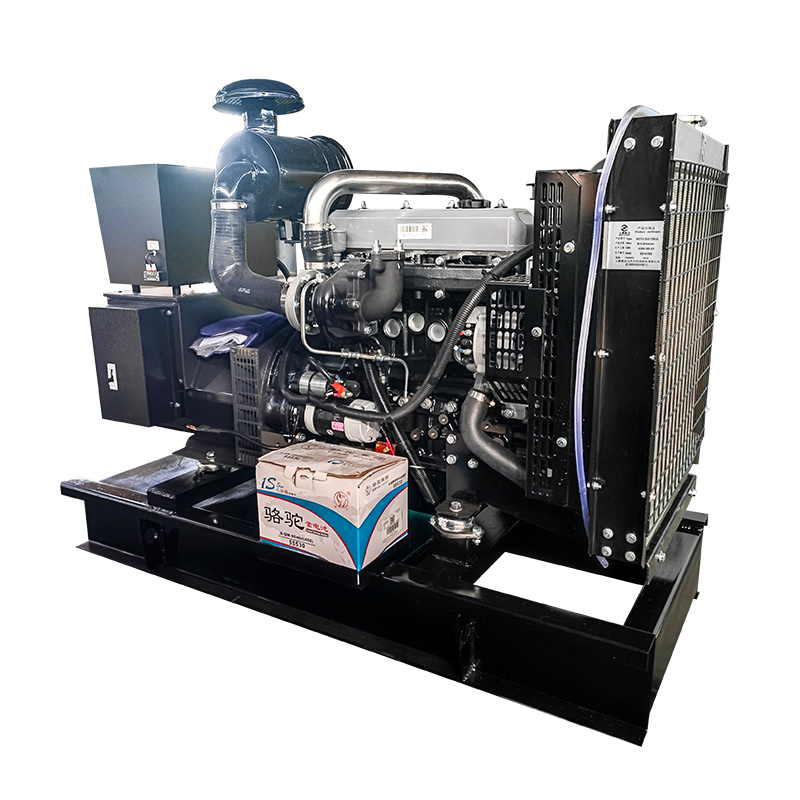 34 kW Shanghai Diesel Generator SetCompact 34 kW three-phase diesel generator set using Shanghai 4ZT3.2-G21 engine, suited to tight spaces where enclosure and ventilation planning matter.View Product →
Two practical reasons drive the choice, and neither is marketing. First, spare parts and service skill for this engine family are concentrated inside China, which shortens unplanned downtime. Second, the engine is available in naturally aspirated and turbocharged four- and six-cylinder forms, so the same supplier can cover a small standby duty and a heavier prime duty without changing the service relationship.
Three questions separate a good purchase from a risky one:
Governor type is the item buyers most often overlook. A mechanical governor tolerates load steps with a wider frequency excursion; an electronic governor holds frequency and voltage much more tightly, which matters when the load includes variable-frequency drives, UPS systems or precision equipment. If your load list contains a large direct-online motor, this single detail decides whether the lights flicker or the machine trips. A step-by-step generator selection guide is worth reading before the load list is finalised, since the sizing logic and the governor choice are usually decided together.
For a broader walkthrough of how load type, starting current and duty regime combine into a rating, see this generator set selection walkthrough, which covers the same reasoning from the load side rather than the engine side.
Start with a load list, not a power number. Separate resistive loads, motor loads and non-linear loads, because they stress a genset in different ways. Resistive heating is easy to serve. Motors draw five to seven times their rated current at direct-online start, so either the genset steps up a frame or the motor is fitted with a soft starter or a drive. Non-linear loads distort the waveform and heat the alternator, which is a separate derating decision.
Convert once and write it down: kVA equals kW divided by the power factor, which is normally taken as 0.8. Then apply margin. A 20 to 25 percent reserve above the running load is the working range for most industrial sites, because it absorbs future additions without forcing a second unit.
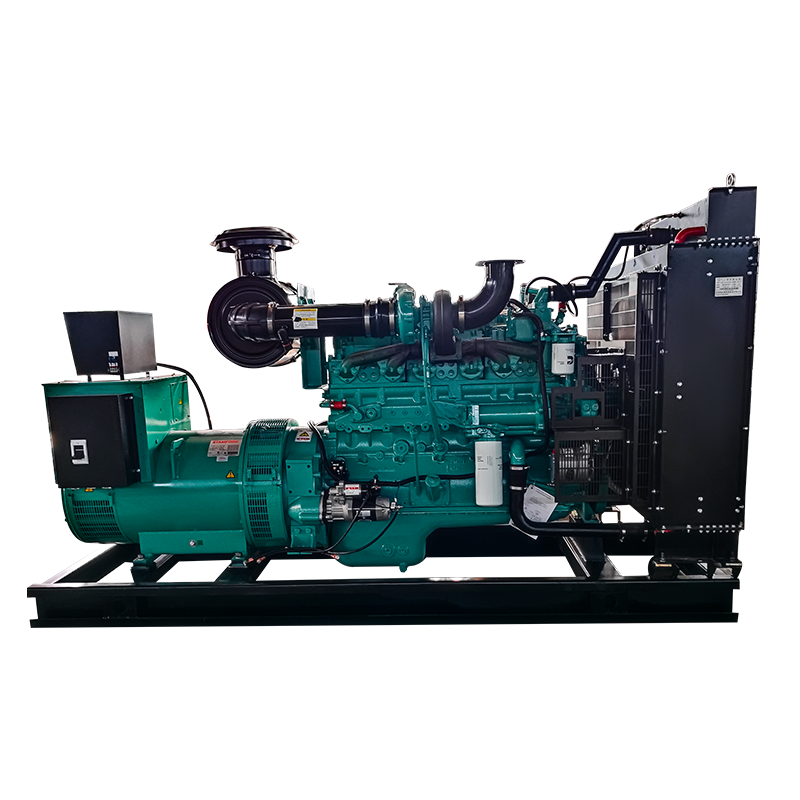
The 400 kW node is the one that most often sits in the middle of this argument. It is large enough to carry a whole small plant but small enough that a wrong duty classification will show up in the first month of operation rather than the first year.
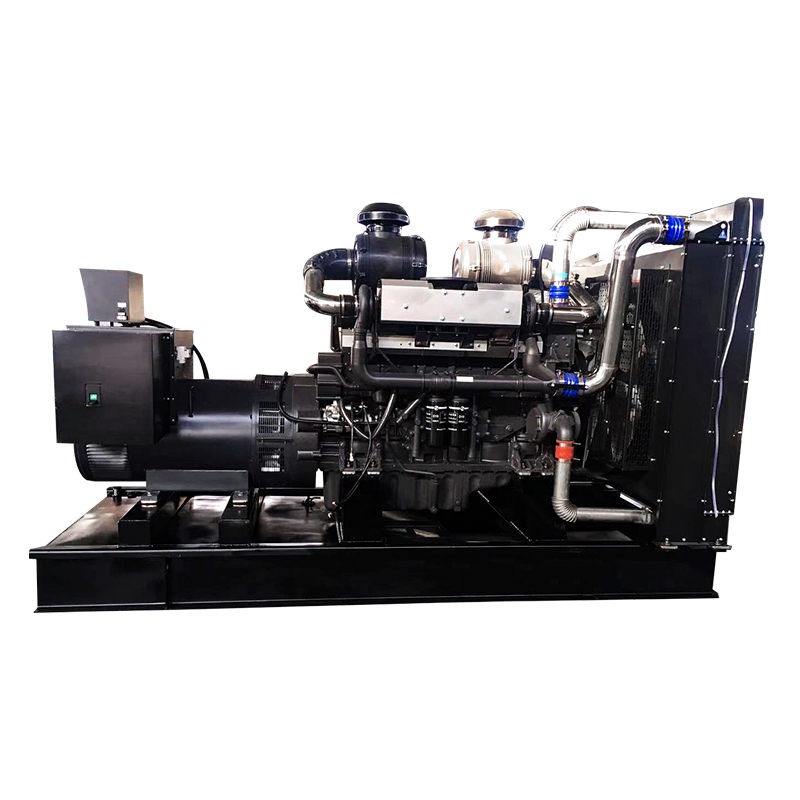 400 kW Shanghai Diesel Generator Set400 kW three-phase diesel generator set powered by Shanghai 6KTAA25-G311, positioned where duty classification and site ventilation require early attention.View Product →
| Item | What to confirm | Why it matters |
|---|---|---|
| Duty regime | Standby or prime, and the annual running hours assumed | The same frame carries different limits under the two regimes |
| Voltage and frequency | 380, 400 or 415 V at 50 Hz, or 60 Hz for export | Reconnecting a machine after delivery is expensive |
| Power factor | Standard 0.8 unless the load is known to differ | Drives the alternator frame size |
| Cooling | Closed-circuit water cooling, radiator and fan sizing | Undersized radiators are the leading cause of summer derating |
| Control panel | Auto start, ATS interface, protection set and alarms | Decides whether the set starts unattended during an outage |
| Fuel system | Day tank volume, transfer line, filtration and water separation | Poor fuel quality damages injection equipment |
| Noise target | Required dB(A) at the boundary or at the nearest neighbour | Determines enclosure type and room treatment |
| Documentation | Load test report, inspection certificate, quality and environmental certification | Needed for acceptance, insurance and export clearance |
Most commissioning problems are site problems, not machine problems. Exhaust routing is the first: the pipe must leave the room, and its length and number of bends add back pressure that the engine was not rated for. Ventilation is the second, and it is the one that gets cut when a budget tightens. A radiator needs a clear intake area and a clear discharge path, and a machine that breathes its own hot air will overheat long before it reaches rated load.
Noise is the third constraint, and it is usually a legal rather than a comfort issue. An untreated genset inside a plant room commonly exceeds 100 dB(A) close to the set. Acoustic enclosure and room treatment typically bring boundary levels into the 75 to 80 dB(A) band, which is what most industrial zoning limits ask for. Vibration isolation and a properly poured foundation also prevent the structural noise that neighbours complain about even when the airborne level is compliant.
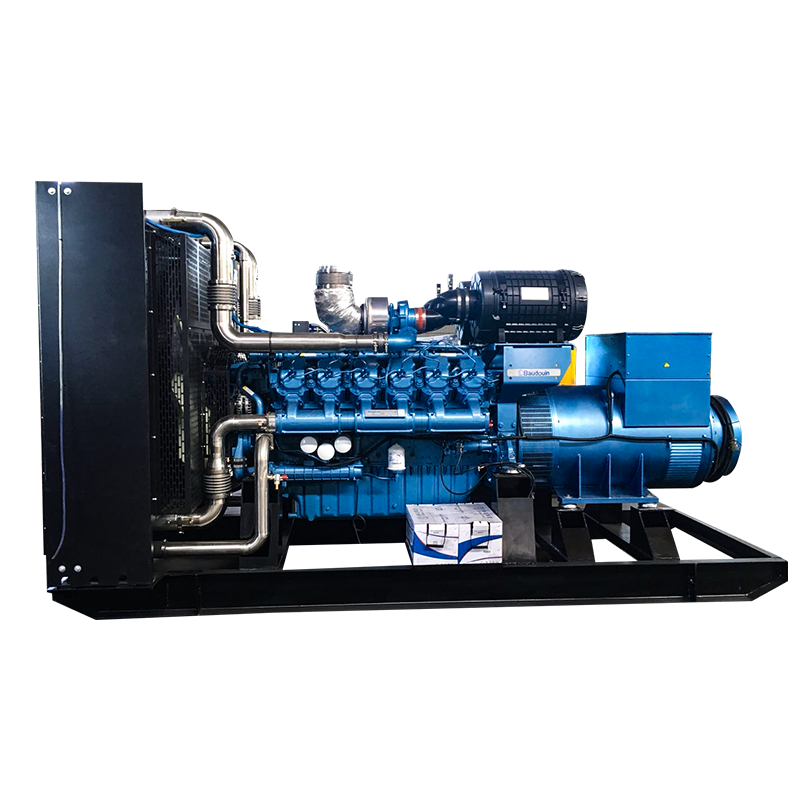
At the heavier end of the Shanghai Diesel range, 800 kW units are normally specified with paralleling capability so that two machines share load and one can be serviced while the site stays powered. That decision has to be made at order time, because the control panel and the switchgear are not retrofitted cheaply.
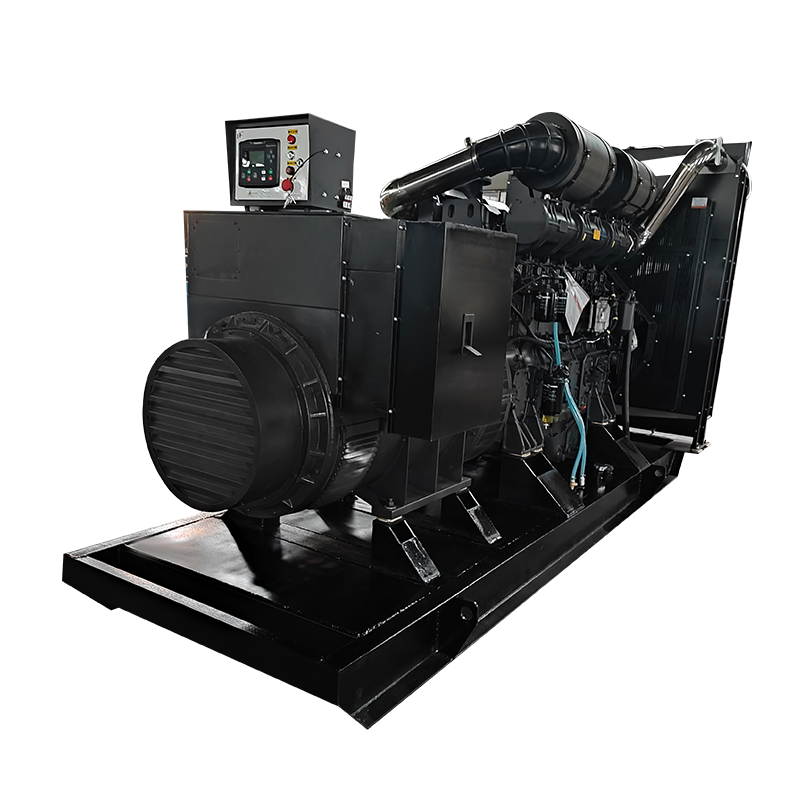 800 kW Shanghai Diesel Generator Set800 kW three-phase diesel generator set powered by Shanghai 6WTAA35-G31, relevant for heavier duty projects where paralleling and switchgear are planned at order.View Product →
Mainly the duty they can hold. The 150 kW class is normally a standby machine serving a defined building load, while the 400 kW class is often specified for prime duty or for a whole plant, which changes the cooling package, the control panel and the switchgear requirement.
Yes, provided the control panel and switchgear are selected for paralleling from the start. Load sharing, synchronising and protection functions are panel-level decisions, not engine-level ones.
Buy standby if the set only runs during outages and is never asked to carry a continuous production load. Buy prime if it will run for extended periods or carry a shifting load through the working day. Choosing the cheaper option and using it the other way is the single most common cause of premature failure.
At minimum, a load test report, an inspection certificate from a recognised testing body, and evidence of quality and environmental management certification. These documents matter for acceptance, insurance and export clearance.
Matching a Shanghai Diesel Engine generator set to a site comes down to three things in order: what the load actually is, what duty the machine will be asked to hold, and what the room will let it do. Fix those three and the choice between a 34 kW, 150 kW, 400 kW or 800 kW unit usually makes itself. Fix them in the wrong order, and the specification that looked cheapest on paper becomes the most expensive one on site.
Engineering Support Beyond the Generator

Whether you need standard generator sets or have complex engineering projects, our team can provide you with professional support.
Recommended
Experienced staff and experts are always available to provide you with professional guidance and solutions to technical problems.