Yangzhou Kangcheng Power Equipment Co., Ltd.
Wholesale genset diesel generator Manufacturer2026-10-02
Content
A 400 kW enquiry looks simple until three questions are answered: what is the largest motor on site, how hot does the plant room get in July, and who will service the machine 90 km from the nearest town? Those answers move the required rating by 20 to 40 percent in one direction or the other, and they change which engine belongs in the frame.
The conclusion first: take the kW rating from a measured load profile, take the engine brand from duty cycle, fuel quality and local service coverage, and treat the alternator as the least risky of the three decisions. Enclosure, control panel, transfer switch and bunded base are packaging around those choices.
The notes below come from a manufacturer that builds diesel generator sets from 7 kW to 2,500 kW around Cummins, Weichai, Yuchai, Shanghai Diesel and Deutz engines, so the examples lean toward industrial and standby duty rather than consumer portables.
Build the load list before the budget. Record the running kW of every load, the power factor, and the starting current of every motor; the starting figures decide the frame in most plants.
Then sequence the loads. Starting the largest motor first and adding smaller loads afterwards keeps voltage dip inside the tolerance most drives and PLCs will accept. As a rule of thumb, hold each step below roughly 25 to 35 percent of the set rating unless the manufacturer confirms better transient behaviour in writing.
Site conditions derate the machine. Altitude above about 1,000 m and ambient temperatures above 40°C cut both engine output and alternator cooling, so a 400 kW set specified for a cool coastal plant can behave like a 350 kW unit on a plateau. Ask for the derating curve rather than applying a generic percentage.
Agree the electrical performance figures in the quotation as well: steady-state voltage regulation, frequency regulation, transient deviation and recovery time. A dip of 10 to 15 percent that recovers within a few seconds is normal on a well-matched set; a 25 percent dip that lingers is a warning sign for anything electronic on the bus. If this is your first load study, a structured walkthrough of how to select diesel generator sets is a sensible check before suppliers are invited to quote.
Engine brand is the single largest variable in a diesel set. It drives purchase price, fuel burn, service intervals, spare-part lead time and the emission standard the unit can be registered under. A 400 kW output can be reached from several very different engine families, and choosing between them is a commercial decision as much as a technical one.
| Engine series | Listed models (kW) | Practical notes |
|---|---|---|
| Dongfeng Cummins | 30, 132, 250, 400 | Compact frames, common in standby rooms |
| Chongqing Cummins | 260, 360, 500, 600 | Heavier industrial frame, more tolerance for high hours |
| Shanghai Diesel | 34, 150, 400, 800 | Low acquisition cost, wide domestic parts supply |
| Weichai Power | 140, 180, 400, 800 | Dense service network, good fuel figures |
| Guangxi Yuchai | 360, 400, 900, 1000 | Suited to long-running prime power duty |
| Deutz | 24, 128, 160, 180 | Compact units for tight plant rooms |
| Chongqing Pangu | 1320 | Large single-frame machine for heavy industry |
The overlap in that table is worth studying. The 400 kW band appears in four of the seven series, so a buyer with a fixed site load can weigh a compact six-cylinder against a heavier 13-litre frame at the same output. Price, fuel burn and overhaul interval all move with that choice.
Above roughly 900 kW the priorities shift. These machines usually run as prime power for mines, data halls or process plants, so bearing life, cooling capacity and service access matter more than a few percent on the purchase order.
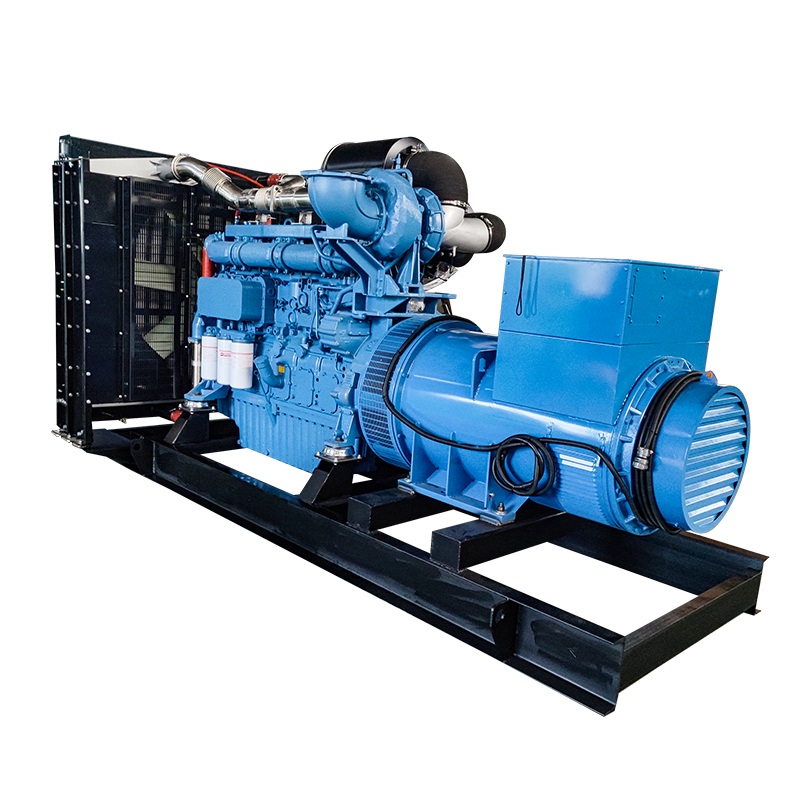 1000KW Guangxi yuchai generator setsHigh Reliability Premium alloy cast iron cylinder block and cylinder head. High Reliability Top-down cooling system design effectively reduces cylinder head temperatur...View Product →
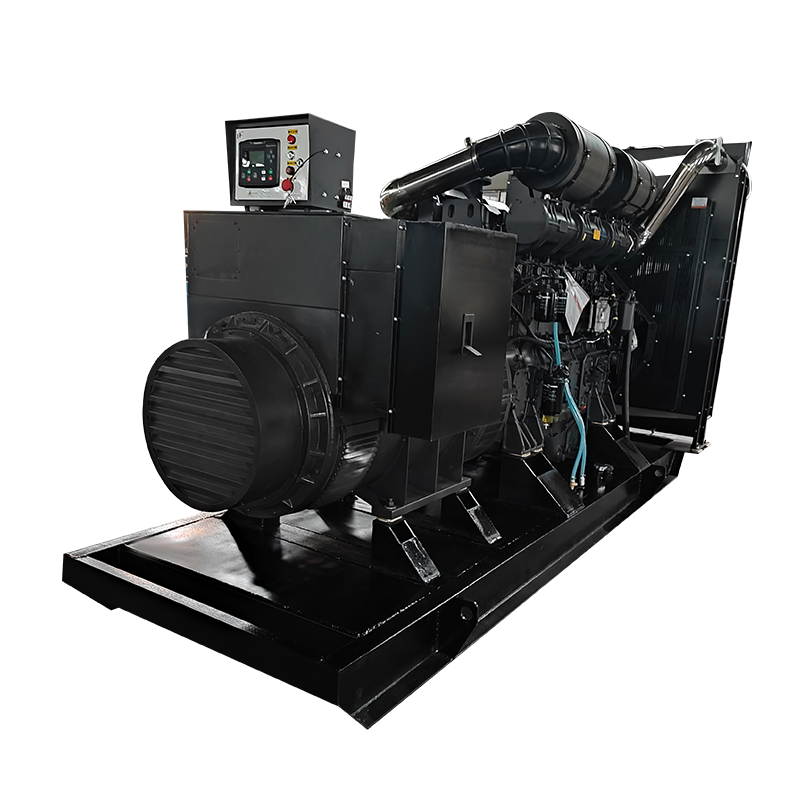
At the very top of the range, a single 1,320 kW frame often carries an entire process line. Getting that rating wrong cannot be fixed later by bolting on a second machine without rebuilding the switchgear and the fuel system.
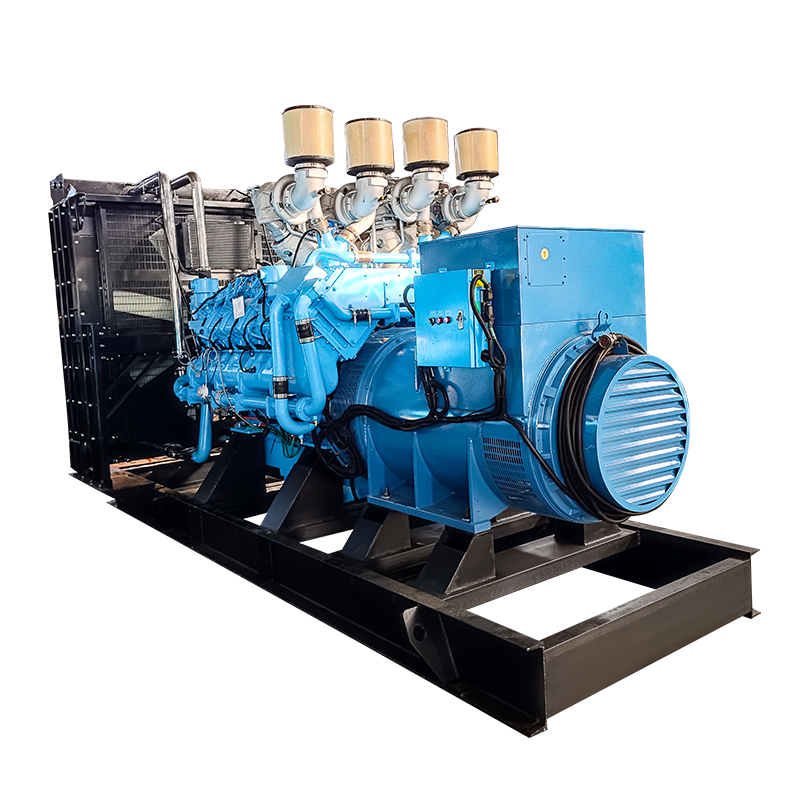 1320KW Chongqing pangu diesel generator setThe Googol series engines are extremely compact and lightweight. The diesel and engine oil filters used for routine maintenance are standardized across the series, and...View Product →
Service reality usually settles the brand debate. Domestic families such as Weichai Power generator sets tend to win on parts availability and technician density, while imported engines may win on hours between overhauls. Both arguments collapse if the nearest trained technician is a two-day drive away.
Highest listed rating per engine series, in kW. The lowest published model in the whole range is 24 kW, and the widest spread sits between 30 kW and 400 kW.
Industrial quotations are rarely wrong on purpose; they are vague by default. The same gaps appear again and again, so ask for each of these in writing.
| Parameter | Typical industrial value | What goes wrong if it stays vague |
|---|---|---|
| Rating basis | ESP, PRP or COP stated on the quote | Warranty disputes and an undersized machine |
| Voltage and frequency regulation | Steady state near ±1%, recovery within seconds | Tripping drives, PLC faults, contactor chatter |
| Fuel consumption | Litres per hour at 50%, 75% and 100% load | Operating budgets built on one best-case figure |
| Sound level | 65 to 75 dB(A) at 7 m for a canopy set | Permit refusals and neighbour complaints |
| Emission standard | Declared standard for the destination country | Site approval or registration blocked |
| Dimensions and mass | Checked against doors, cranes and transport limits | Rigging changes priced after delivery |
The purchase price is the smallest part of a ten-year cost on a prime-power site. An indicative split for a set running several thousand hours a year puts fuel at roughly half of the total, capital cost under a third, maintenance and spares around one sixth, and the rest in installation and switchgear.
Two practical consequences follow. First, specific fuel consumption is lowest near 70 to 80 percent load, so a 500 kW set carrying a steady 150 kW burns more fuel per kWh than a correctly sized 200 kW machine, and it runs cold enough to wet-stack the exhaust. Second, a set that runs often should be chosen for service access: filter and injector lead times, and the distance to the nearest trained technician, cost more over ten years than a few percent on the purchase order.
Standby sites are the opposite case. If the machine runs 60 hours a year, first cost, starting reliability and battery maintenance dominate, and fuel quality matters more than a marginal efficiency difference.
For standby duty with a mixed load and no large direct-on-line motors, a 350 to 400 kW set is a normal starting point. Add the starting demand of the biggest motor, apply the site derating, and the answer usually lands higher rather than lower.
Only if it is rated for it. Prime power allows unlimited hours with a short overload allowance; continuous power allows unlimited hours at a steady load with none. Emergency standby units are built for a few hundred hours a year.
No. Running below about 30 percent load for long periods causes incomplete combustion, carbon build-up and higher fuel consumption per kWh. Oversizing also costs more in capital, floor space and maintenance on a machine that never reaches operating temperature.
Start with the service network within reach of the site, then compare fuel burn at your average load, then price. Engine families from Cummins diesel generator sets and other established builders usually win on parts availability, while some imported engines win on hours between overhauls.
Three decisions carry most of the risk on an industrial generator project: the duty rating written on the quotation, the load list behind the kW figure, and the engine family that will be serviced for the next decade. Get those right and the enclosure, control panel and fuel tank become details instead of problems.
Send the load list, site altitude, ambient temperature and expected running hours before asking for a price. A quotation built on those four inputs takes longer to prepare and far less time to defend after delivery.
Engineering Support Beyond the Generator

Whether you need standard generator sets or have complex engineering projects, our team can provide you with professional support.
Recommended
Experienced staff and experts are always available to provide you with professional guidance and solutions to technical problems.